Timeline

Since before the signing of the Paris Agreement, and despite warnings about the implications of increased emissions resulting from fossil fuel expansion, RELX has helped the industry to "accelerate discoveries." RELX divisions continue to enable and empower high-emitting customers that have business plans antithetical to a livable future. 

Europe “need[s] investments in gas plants...we need those additional [gas] plants.”
—RELX podcast (2025)

"No new fossil fuel-burning power plants should be built.”
—Report of the Special Rapporteur on the promotion and protection of human rights in the context of climate change (2025)
NOTE: Reed Elsevier was formed in 1993 when Reed International and Elsevier merged. It rebranded as RELX in 2015, with divisions that include LexisNexis, RX, and ICIS. In the following, BLUE sections are meant to include positive claims and pledges, as well as advocacy efforts of various stakeholders; ORANGE sections are meant to represent RELX's negative impacts, fossil fuel expansion efforts, and activities that appear to contradict RELX's claims. Information is grouped by year but is not strictly chronological.

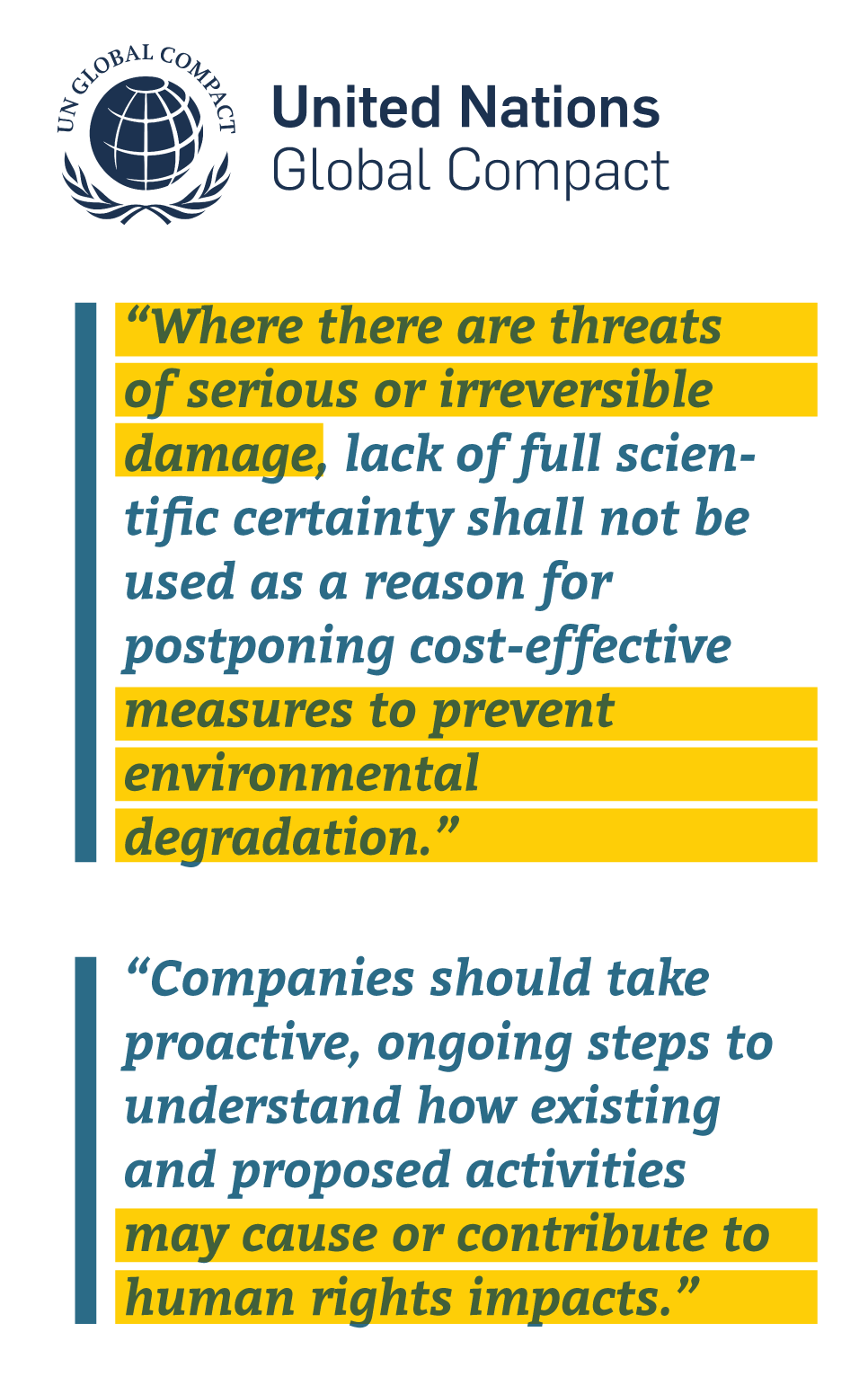
2003Reed Elsevier joins the UN Global Compact. The UNGC supports a “precautionary approach to environmental challenges” in which a lack of scientific certainty is no reason to postpone measures to prevent environmental degradation if there are "threats of serious or irreversible damage.” UNGC also declares that "businesses have minimum responsibilities to meet to respect human rights. They must act with due diligence to avoid infringing the rights of others, which includes addressing any negative human rights impacts related to their business." Principle One states: "Companies should take proactive, ongoing steps to understand how existing and proposed activities may cause or contribute to human rights impacts."

2005Due to its arms trade shows, an article in The Lancet calls out the company’s violation of UNGC guidelines, which aim to prevent “human rights abuse.” Scientists for Global Responsibility make this same observation. The Lancet's editors and International Advisory Board simultaneously call for the company “to divest itself of all business interests" that threaten human "health and well-being.”

2005Reed Elsevier indicates it considers that this business activity "adheres to the highest standards of scrutiny" and complies with the United Nations Global Compact. Emphasizing humanitarian roles undertaken by armed forces, the company asserts it is meeting the "highest ethical standards," but does not address concerns about cluster bombs and human rights.

2006Reed Elsevier reports to the UNGC that it's embedded "support and respect the protection of internationally proclaimed human rights" in its Code of Ethics.

2007Reed Elsevier defends the shows as accounting for less than 1 percent of revenue and serving “reputable companies,” some of which produce “torture equipment" that's illegal to sell in the E.U. After a 3 year campaign, The Joseph Rowntree Charitable Trust divests from Reed Elsevier upon observing it's “rapidly expanding” services to companies that are “deeply unethical and irredeemably corrupt."

2008The company exits from the weapons exhibitions sector (but continues to serve weapons manufacturers in other ways).

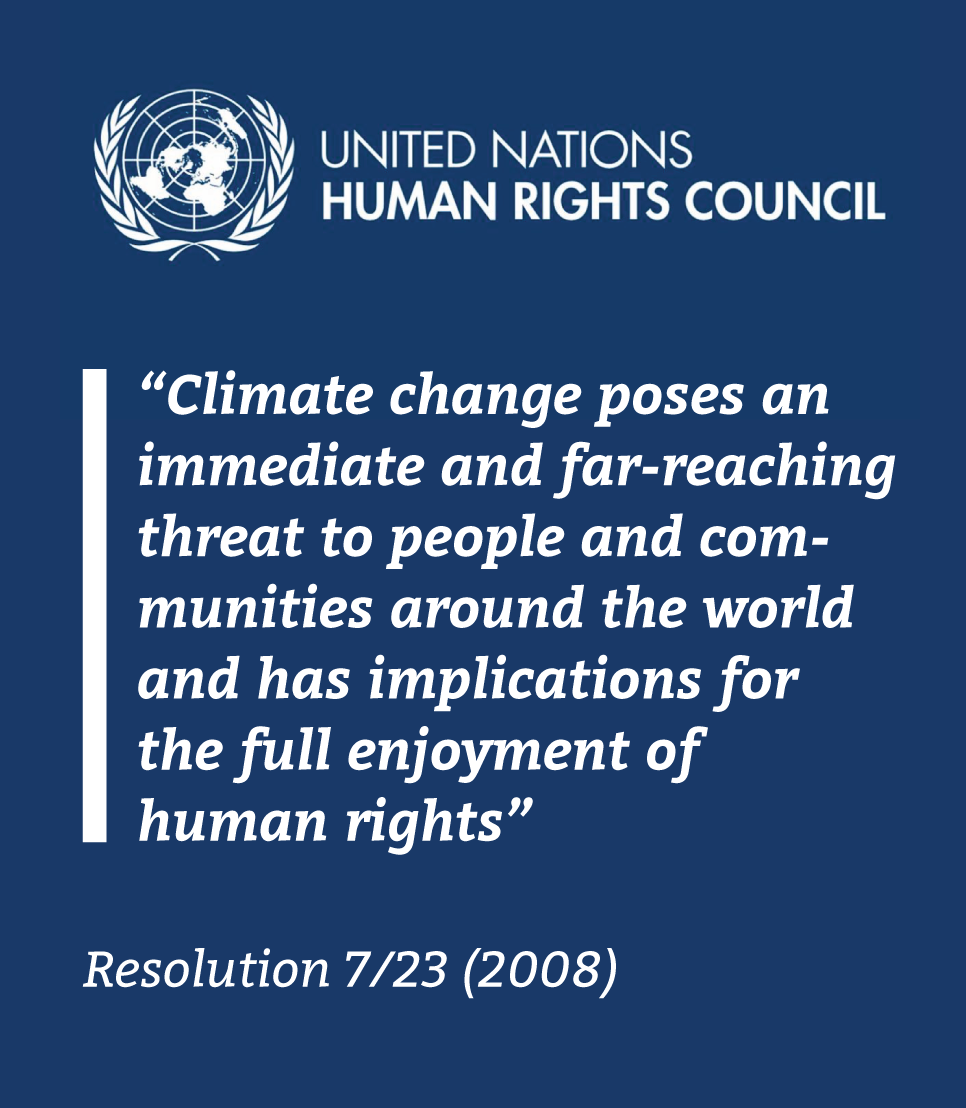
The United Nations Human Rights Council unanimously approves a framework for business and human rights that calls on companies to "take proactive steps to understand how existing and proposed activities may affect human rights." The United Nations Human Rights Council adopts Resolution 7/23, in which the UN explicitly recognizes that climate change "has implications for the full enjoyment of human rights.”

James Hanson observes the "requirements to halt carbon dioxide growth follow from the size of fossil carbon reservoirs," but fossil interests are inhibiting a prompt move to carbon-free energy. Reed Elsevier continues to report that it supports "a precautionary approach to environmental challenges," is "limiting any negative consequences" on the environment, and that "UNGC environmental principles are incorporated in [its] Code of Ethics and Business Conduct." RELX also claims its negative impact on the environment is "principally through the use of energy and paper, the use of print and production technologies and the recycling of waste."

2009Reed Elsevier promotes how its R&D product Knovel is used by BP for addressing challenges in oil sands pipelines. Reed Elsevier donates millions to U.S. politicians as one of 23 members of the private enterprise board of the American Legislative Exchange Council (ALEC); ALEC votes to adopt a model bill opposing federal regulation of hydraulic fracturing, deemed to be "environmentally safe."

2010At the AGM, an investor asks if “Reed Elsevier take[s] environmental aspects into account when taking decisions related to expanding the business.” He is told “Reed Elsevier does take these things seriously when expanding. And if you would like to, Marcia Balisciano, who is responsible for all of this within the organization, is here today and you would be very welcome to talk to her after the meeting.”

2010Elsevier launches Geofacets, a workflow solution "requested by geoscientists working in resource exploration" (Webinar: Introduction to the Geofacets-SEPM Millenium Edition) who are "looking for new opportunities across the globe." ALEC introduces the “Eminent Domain Authority for Federal Lands Act,” which would authorize state governments to open protected wilderness areas for “greater oil, gas, and coal exploration.

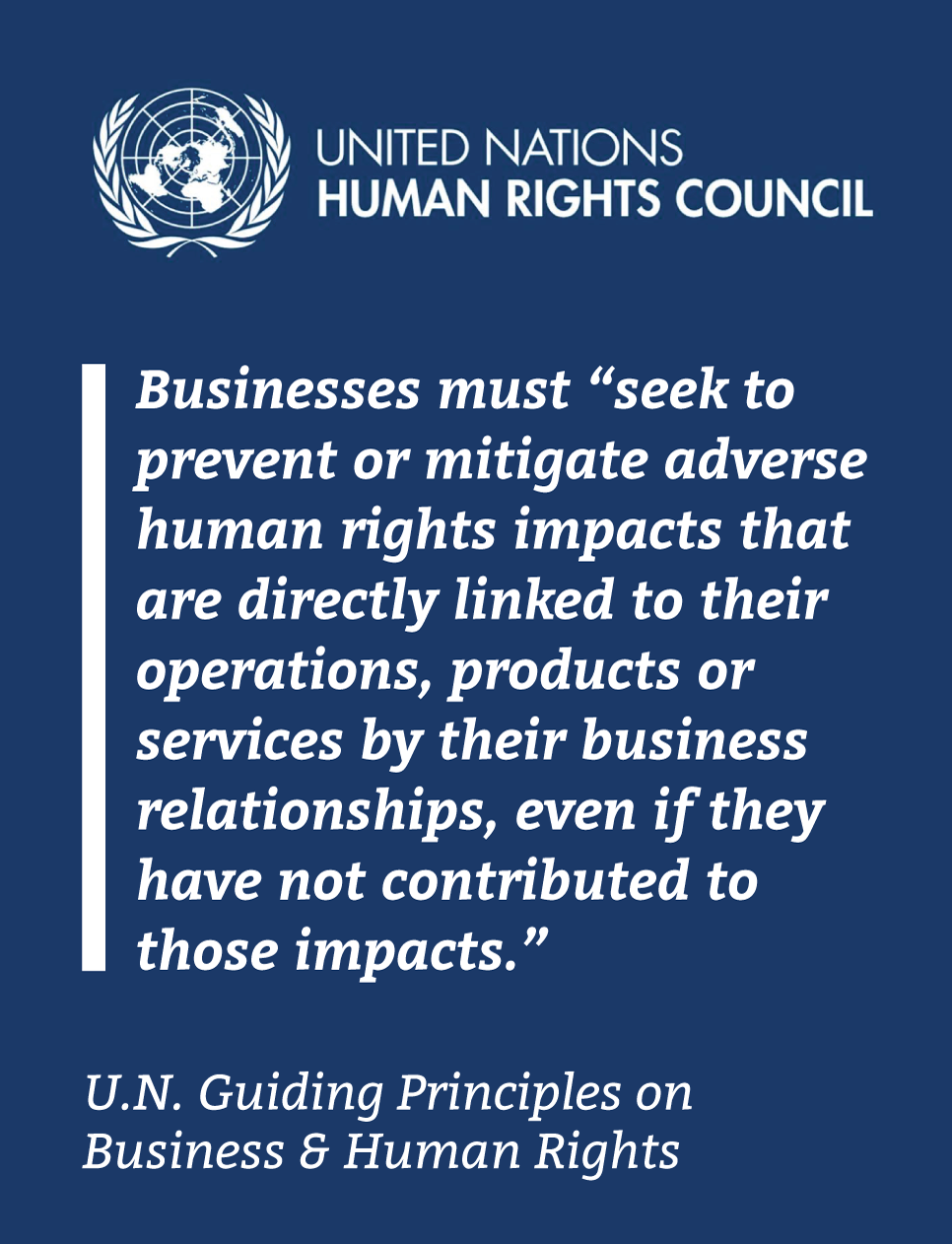
2011The UN Guiding Principles on Business and Human Rights (UNGP) are adopted. Businesses are guided to "seek to prevent or mitigate adverse human rights impacts that are directly linked to their operations, products or services by their business relationships, even if they have not contributed to those impacts…Questions of complicity may arise when a business enterprise contributes to, or is seen as contributing to, adverse human rights impacts caused by other parties." 

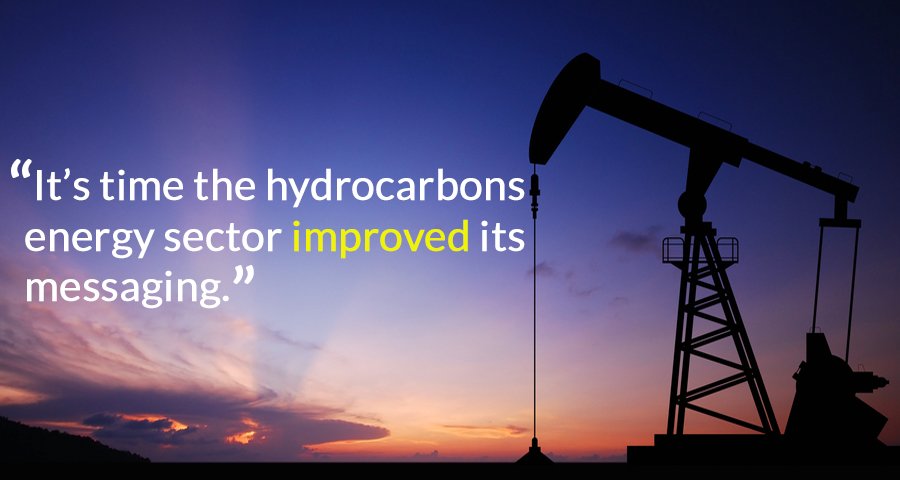
At the AGM, shareholders are “informed that Reed Elsevier [is] setting a good example of sustainable business practice,” but an investor expresses concern that the CEO’s presentation didn’t mention “climatic concerns.” Mr Erik Engstrom emphasizes the business aim is “to improve the outcomes for professional customers” but that “corporate responsibility [is] very important to Reed Elsevier.” He notes the company does have targets, but that “corporate responsibility [is] much bigger than that.” Another investor encourages the company to improve messaging so “sustainable investors would remain interested in Reed Elsevier.” Attendees are told the company has come a long way in “contribut[ing] positively to the sustainability and social responsibility agenda” and “that the businesses the Company was in was essentially in many places supporting sustainability.” The CEO emphasizes that it’s a market leader in “publishing on alternative energy” while maintaining sustainability is “part of how Reed Elsevier runs its business.”

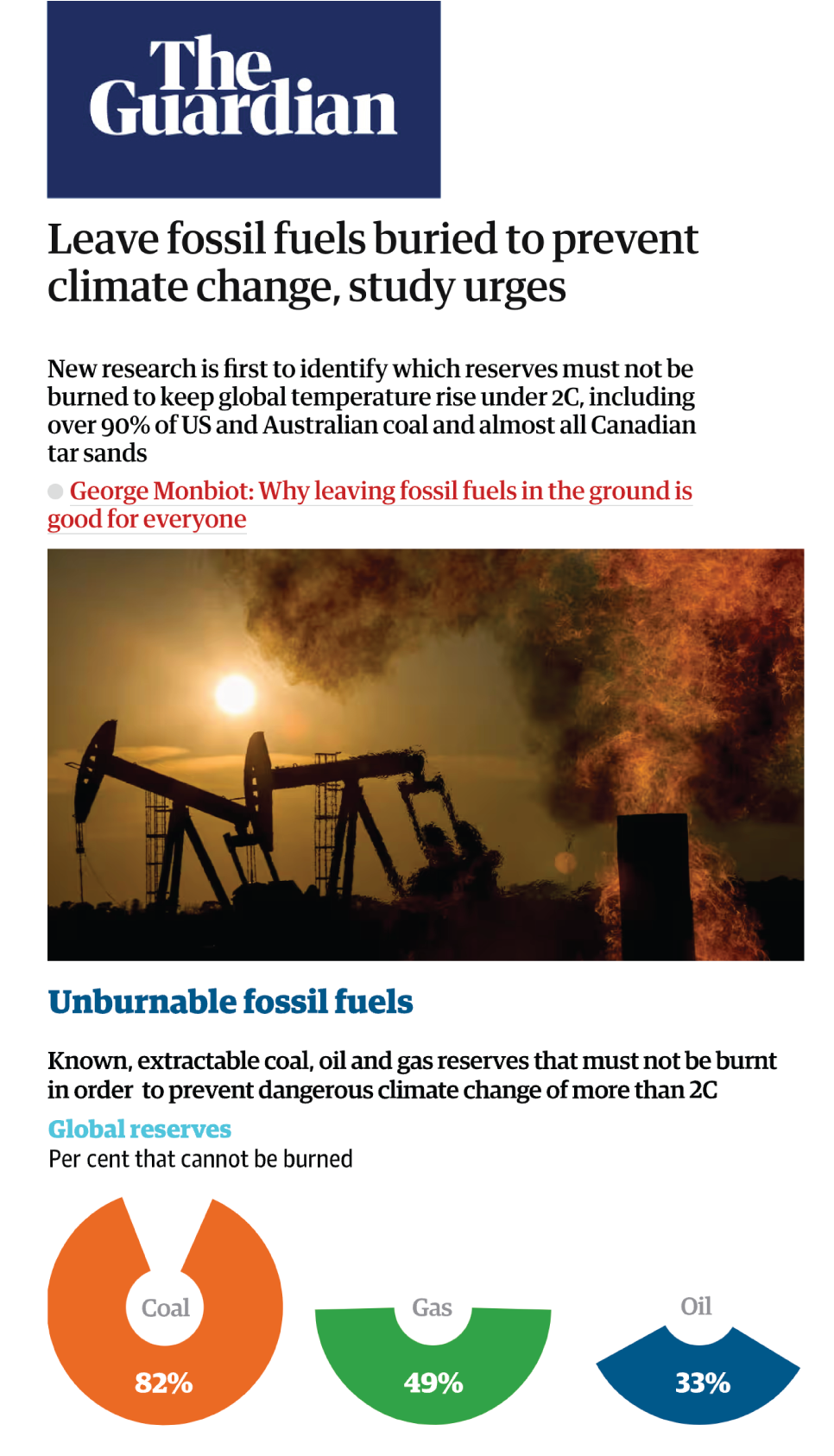
Scientists warn that most of the world’s fossil fuel reserves cannot be burned without causing catastrophic global heating.

2011The company promotes how the research it publishes helps to advance oil and gas exploration. Elsevier has "over 60 journals...used by geoscientists in the industry on a daily basis." (Elsevier oil and gas webinar, How to Make a New Venture Project More Successful, July 13, 2011). Elsevier and the Society Geological Society of London pledge to "deliver significant advantage to companies focused on upstream oil and gas exploration." Reed Exhibitions (RX) adds an oil and gas expo "to support the continuing growth of Brazil’s oil and gas industry." Reed Elsevier continues to partner with ExxonMobil, Koch Industries, and others on the ALEC private enterprise board, which generates draft legislation that targets U.S. agencies such as the Environmental Protection Agency (EPA) and is “regularly passed into law.” The Center for Media and Democracy reports that “the greenhouse gas emissions and catastrophic climate crisis that has already begun could not have a better lobbyist than ALEC members.” ALEC holds a session at its annual meeting titled "Warming Up to Climate Change: The Many Benefits of Increased Atmospheric CO2."

2012Leaders at the AGM are asked about awareness of amendments of the OECD Guidelines “consistent with the UN Guiding Principles on Business and Human Rights and if so, whether this had any concrete consequences for Reed Elsevier’s policy.” The company Chairman states Reed Elsevier is a “committed supporter of human rights and had been a signatory of the UN Global Compact for a long time,” but he is not familiar with the amendments of the OECD guidelines “and that Reed Elsevier’s CSR team could certainly engage on this matter.”

Company division LexisNexis issues a reminder that biodiversity is threatened by “our addiction to fossil fuels."

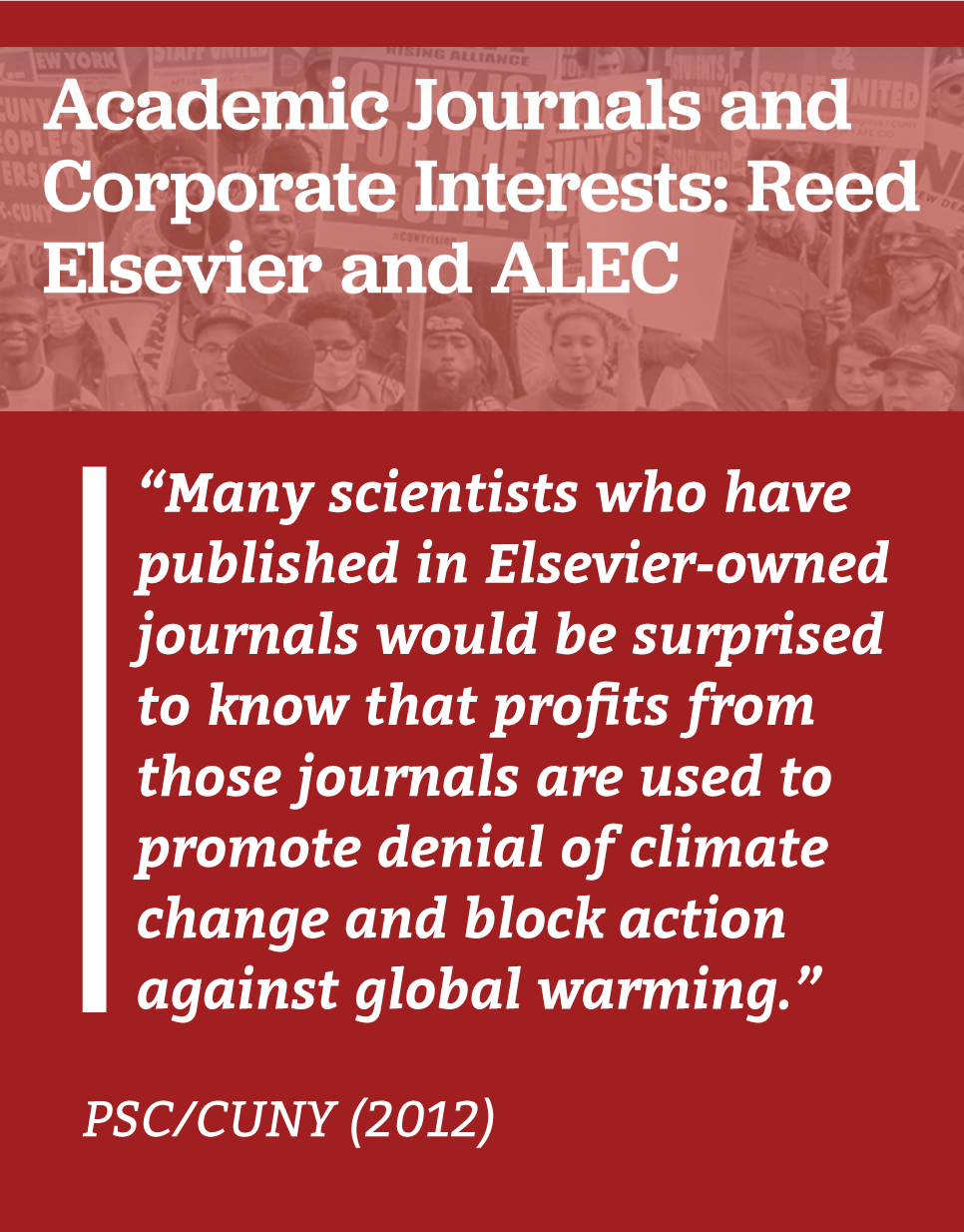
2012The company maintains its position as “a leading member of ALEC,” as “profits from [its] journals are used to promote denial of climate change and block action against global warming.” (Increased scrutiny leads to its exit from the group.) Ron Mobed, a petroleum engineer by training, becomes CEO of Elsevier. In his previous role he developed "integrated data and tools for finding and producing oil and gas." Elsevier promotes Knovel for aiding E&P professionals using new technologies to move into “deeper waters” and for serving a “fossil fuel resurgence.” Elsevier partners with Society for Sedimentary Geology (SEPM) “to solve some of the most critical problems posed in oil and gas exploration." LexisNexis promotes legal and business-related resources covering oil, gas, and coal exploration and production. A company expo spreads the fear that 'flicking the switch' from coal to renewable energy would "risk global depression."

2013Elsevier positions itself "as the leading book publisher for the oil and gas industry" and launches the Journal of Unconventional Oil and Gas Resources to support "field development of unconventional resources."

2013The company informs investors it's "very pleased with the way that the sustainability agenda had become embedded in the company."

2014An investor tells leaders at the AGM that “although the United Nations Global Compact was important, more could be addressed in the human rights area,” referencing the UN Declaration of Human Rights and OECD Guidelines. Regarding human rights audits, she notes that she “could not find any report or details on the outcomes or the action taken by the Company.” The company insists it's "keeping up to date [on human rights], and also challenging itself to do everything that could be done…Reed Elsevier [is] very active on the human rights area.” The company notes that “Reed Elsevier’s audits included questions that explicitly dealt with the adherence to human rights” including "environmental business practices.”

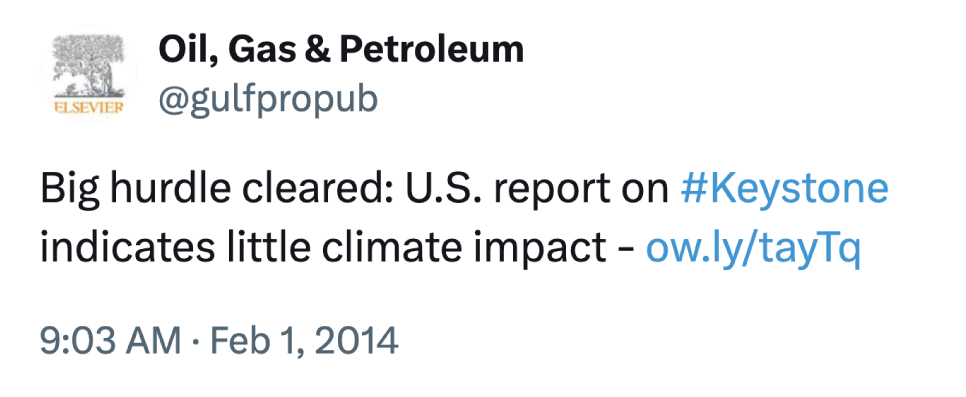
2014Geofacets works to accelerate fossil fuel exploration. In "helping solve the exploration puzzle in upstream oil and gas," Elsevier claims that "exploration has never been more seamless." (Video) Elsevier sees a long future ahead for developing North Sea oil and gas. A new coal shiploader "capable of loading at 8250 tonnes per hour" is promoted by a company expo as "great news for the region" and coal mine expansion noted for its promotion of jobs growth. Elsevier promotes the idea that the Keystone pipeline will have "little climate impact"—despite the oil industry-influenced report referenced being labeled "a sham"—while also promoting materials serving hydrocarbon expansion.

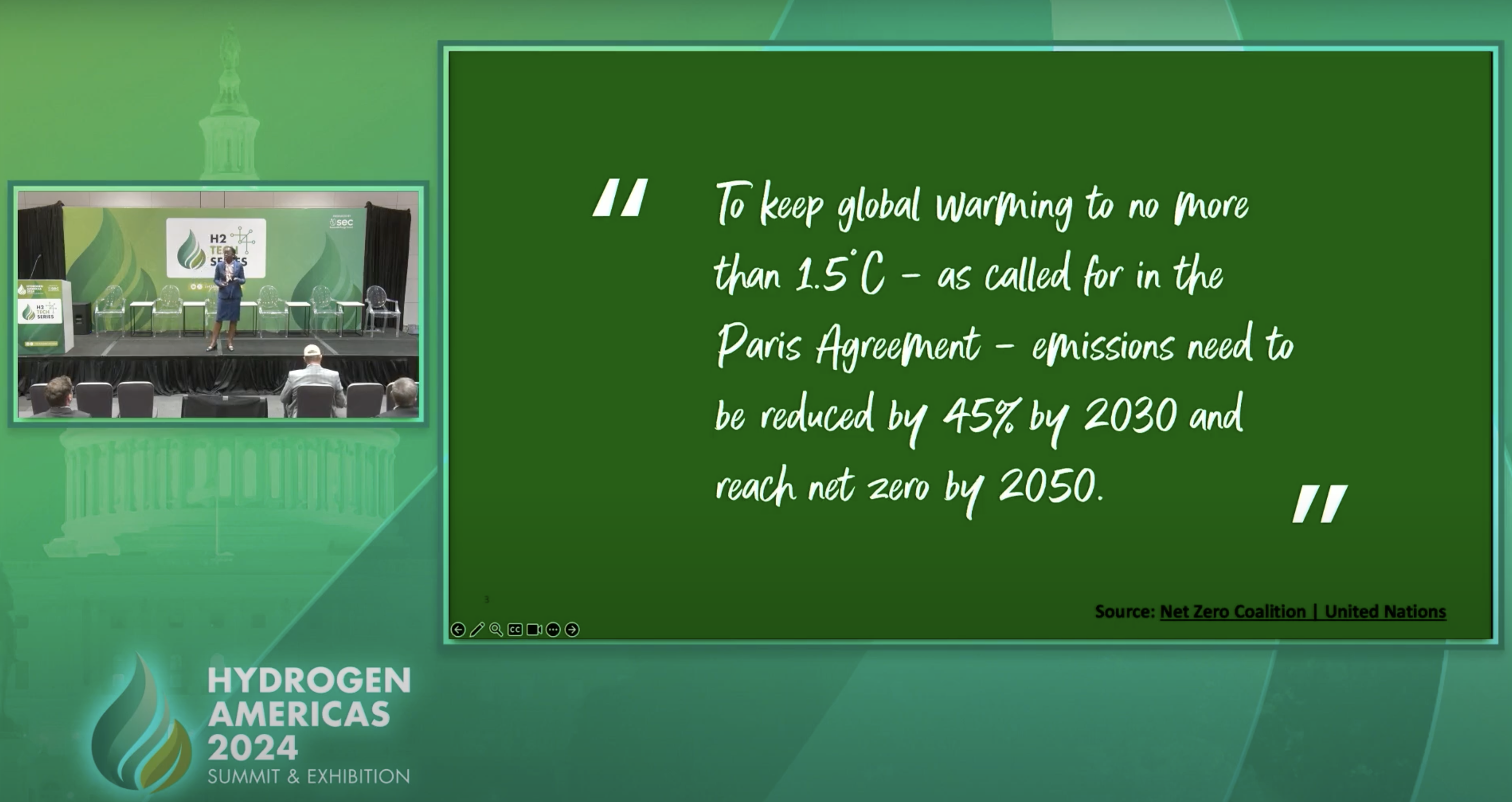
2015 The Paris Agreement calls for limiting temperature increase to 1.5°C above pre-industrial levels to prevent serious and irreversible damage. Scientists declare that to keep global temperature rise below 2°C, a third of known oil reserves, half of gas, and 80% of coal have to stay in the ground; The UN Office of the High Commissioner for Human Rights (OHCHR) states that businesses must “be accountable for their climate impacts and participate responsibly in climate change mitigation and adaptation efforts with full respect for human rights.”

The Keep it in the Ground Act is introduced in the US Senate; it would prohibit the digging or drilling for fossil fuels on federal land or waters to align federal energy policies with U.S. climate goals. Richard Horton, the editor-in-chief of Elsevier's flagship journal The Lancet, signs a divestment letter concerned with "reducing global fossil fuel production," stating that "it is wrong to profit from an industry whose core business threatens human and planetary health."

At the annual general meeting, RELX shareholders are assured of “its alignment with the UN Global Compact,” that “in may ways Reed Elsevier already operated according to circular economy principles…[and] that the biggest [environmental] contribution Reed Elsevier could make was through science, through its journals and what was published.” A company report touts Elsevier’s sustainability research, boasting that “sustainability is deeply embedded within Elsevier.” The company acknowledges "climate change is an important issue" and asserts it “agree[s] with scientific opinion that we must reduce the total quantity of absolute greenhouse gases in the atmosphere.”

2015RELX serves "leading companies in natural resource exploration around the world to support and justify business decisions, assess risk in drilling and development activities, and increase exploration team productivity." Elsevier partners with Wiley to include 100,000 maps from 26 journals in Geofacets, providing content “invaluable to exploration geoscientists operating all over the world.” AGU members gain free access to the product. The Director for Product Management at Geofacets promotes expediting exploration—and then shares a map that shows where sea level rise will drown American cities. RELX division LexisNexis offers due diligence solutions for oil and gas to remove barriers to opening operations in emerging markets. A RELX mining expo promotes an article celebrating record breaking coal exports in Newcastle and noting "coal export industry has also been booming in Queensland"—where RELX hosts another mining expo. Elsevier promotes “the benefits of #shale development,” as concerns mount over methane emissions from fracking. Elsevier suggests the Permian Basin in Texas for companies in search of hydrocarbon E&P opportunities. Highlighting a Shell oil discovery and upcoming drilling operations in Mexico, Elsevier promotes a gold rush for Mexican oil and gas as also being a "data rush" that the company can help fuel. Elsevier launches Geofacets Mexico, providing competitive edge to Mexico’s oil and gas block bidders. A RELX service for engineers helps guide customers in drilling techniques and pipeline construction.

2004: A UNGC report coins the investment term 'ESG.' Businesses like RELX embrace it and name a "Head of ESG." Within 20 years ESG is described as “marketing gobbledygook” that “is actively misleading people” and creating a “dangerous distraction” from regulation that would fit the scale of problems such as climate change.

2012: At the AGM, a shareholder draws attention to this UNGP guideline on activities carrying adverse human rights impacts.

Headline and graphic from The Guardian, based on data from a paper in Nature (2015).

An Elsevier website mocks climate activists as "muddle-headed arts graduates and clicktivists" and that "those who oppose fracking seem willing to believe any propaganda." While acknowledging it will "cause climate change," fracking is framed as "logically defensible."

LexisNexis promotes the idea that oil and gas should "learn from Trump" by using fear-based messaging to fight climate activists. (2017)

Shell's CEO at a 2018 Elsevier event: "Our goals should also be attainable, with enough ambition to keep global warming below 2 degrees Celsius." At the time Shell was already facing lawsuits for being misaligned with that goal.

Carbon Tracker diagram (2019).

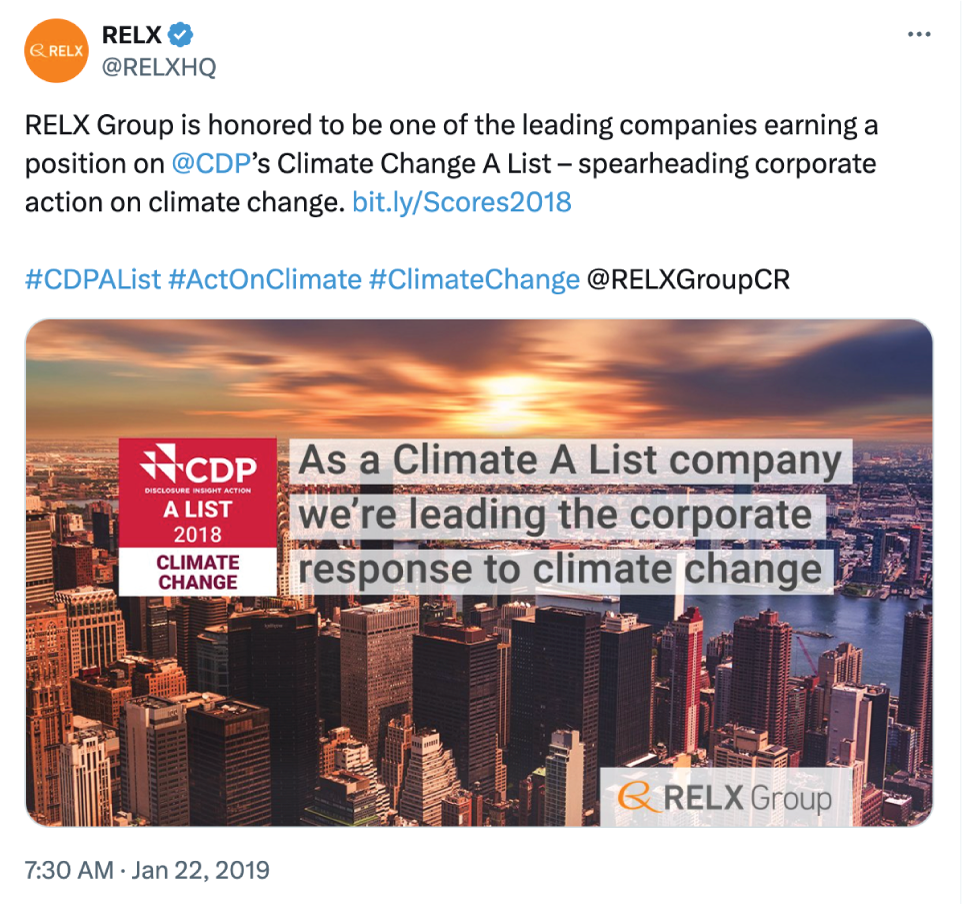
RELX promotes its leadership in environmental transparency and performance on climate change.

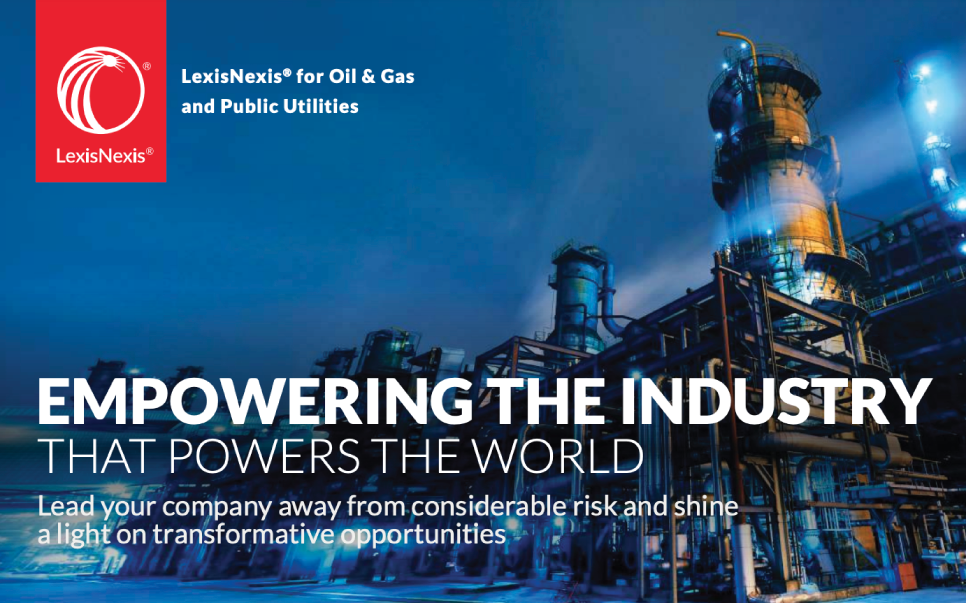
LexisNexis markets a product that serves the financing of new hydrocarbon exploration and development projects around the world.

2016 RELX tells investors it's "won a number of awards in the sustainability area."

2016As Elsevier highlights “billions of barrels of newly-discovered shale #oil” in Texas, the Company declares that "oil and gas companies need to invest $250 billion per year in exploration, and drill approximately 670,000 wells [by 2020]" that will require "a sustainable commitment to investing." (R&D Solutions PDF) Elsevier notes that Mexico is now offering its first deep-water oil exploration blocks to bidders; Geobiology Mexico promotes an Elsevier webinar on using Geofacets. A RELX mining expo finds that an "Australia coal rush [will] boost economic growth," generate "ongoing jobs," and is "needed to keep lights on." An Elsevier R&D Solutions case study says that for "helping experts dig deeper and discover more...there’s no better partner." The company markets its oil and gas books as serving the “increased need to locate unconventional resources,” covering “full development cycle of unconventional resources, from exploration through production.” At the Offshore Technology Conference, Elsevier promotes new books addressing "the increased need to locate unconventional resources such as heavy oil and shale" and other "examples of how Elsevier is enabling science to drive innovation." RELX's PAC continues to support climate-denial politicians in U.S. elections. An Elsevier website dismisses climate advocates as "want[ing] us to leave all fossil fuels in the ground." It continues: "Will fracked gas cause climate change? Sure it will...[but] by bringing jobs and other benefits, why not frack for gas?"

2017RELX launches the SDG Resource Centre, supporting "efforts to advance this vital global agenda." Elsevier amplifies a "call for removing fossil fuels & petrol products from chemical production" and promotes a resource that acknowledges “expanding [energy] supply with fossil fuel-based energy sources could endanger the delivery of [SDG] Goal 13 [Climate Action].” Elsevier observes the U.S. "Exit from the Paris Agreement Disregards Science and Endangers Global Environment." As it promotes its contributions "to keeping global average climate warming to below two degrees Celsius," RELX is listed in the Global 100 Most Sustainable Corporations. RELX signs the We Are Still In Declaration, aiming to “continue to support climate action to meet the Paris Agreement [...and] remain actively engaged with the international community as part of the global effort to hold warming to well below 2°C and to accelerate the transition to a clean energy economy.”

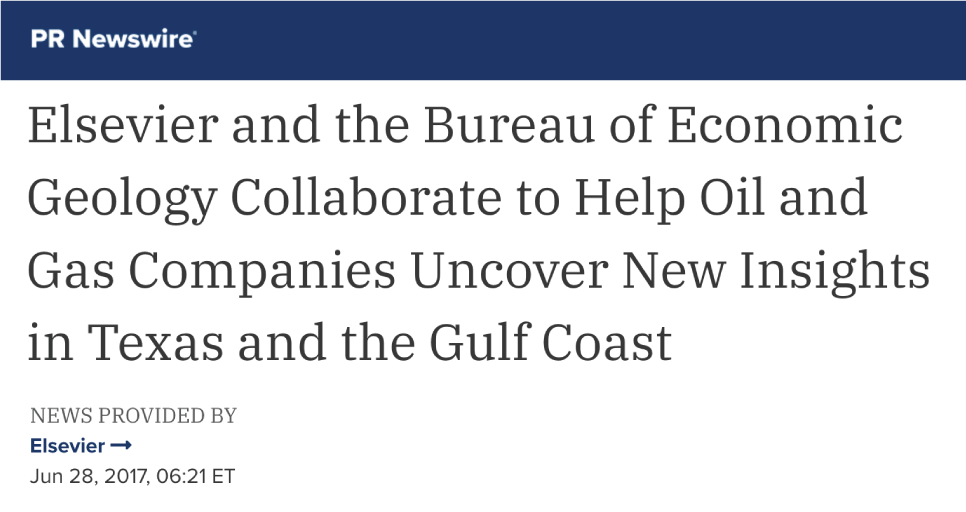
2017LexisNexis repeatedly promotes "helpful" advice in an article that calls for oil and gas to push back on “the ‘no more fossil fuels’ movement” by using fear-based messaging—holding that the real story of the Dakota Access Pipeline was the “polluting encampment” of people protesting “the safest pipeline to be designed in history.” As Elsevier demeans protesters as having "no fracking clue," it highlights a new Alaska oil boom, fueled by new discoveries, innovations in drilling, seismic imaging and data processing, and Trump's promotion of oil and gas expansion; the article emphasizes that a modern military is inconceivable without oil, with the website offering readers a free chapter on “Exploration Techniques” from Shale Gas: Exploration and Environmental and Economic Impacts. Other company publications promote hydrocarbon exploration, reservoir analysis, and identifying sweet-spots, as Elsevier collaborates with the Bureau of Economic Geology to help "oil and gas companies uncover insights potentially leading to the discovery of economically viable hydrocarbons.” As "exploration continues for new sources of oil and natural gas," and with U.S. President Trump expected to issue an executive order to promote oil and gas E&P in the Arctic and Atlantic, Elsevier emphasizes that "shale oil and gas can be produced sustainably." A RELX mining expo frames a partner's new coal project as a boost for jobs. Elsevier’s R&D Solutions portfolio of tools "integrate data, analytics and technology capabilities to help oil & gas businesses reduce E&P costs and boost operational efficiency." (R&D Solutions for Oil and Gas PDF) Elsevier promotes services that enable companies “to find new oil and gas discoveries with increasingly greater precision and confidence.” Regarding "negative impact on costumer use of its products and services," investors are informed "it was quite difficult to measure how [its] customers behaved... RELX focused its efforts [on its own activities] rather than trying to measure what exactly the customers did with the products, which was quite difficult." (RELX AGM).

2018 A RELX (LexisNexis) publication observes that "misleading investors on climate change-related risks poses serious legal risks to companies and their directors."

With it estimated that there's only 10 more years of emissions in the carbon budget at the current rate and the "main obstacle to compliance with any reasonable warming target [being] the abundance of fossil fuels," scientists call for a fossil fuel non-proliferation treaty to keep warming below 1.5°C. RELX reports its A rating in CDP's Climate Change programme, as Elsevier markets a research paper, noting that "#FossilFuel extraction is linked to significant abuse of human rights across the globe."

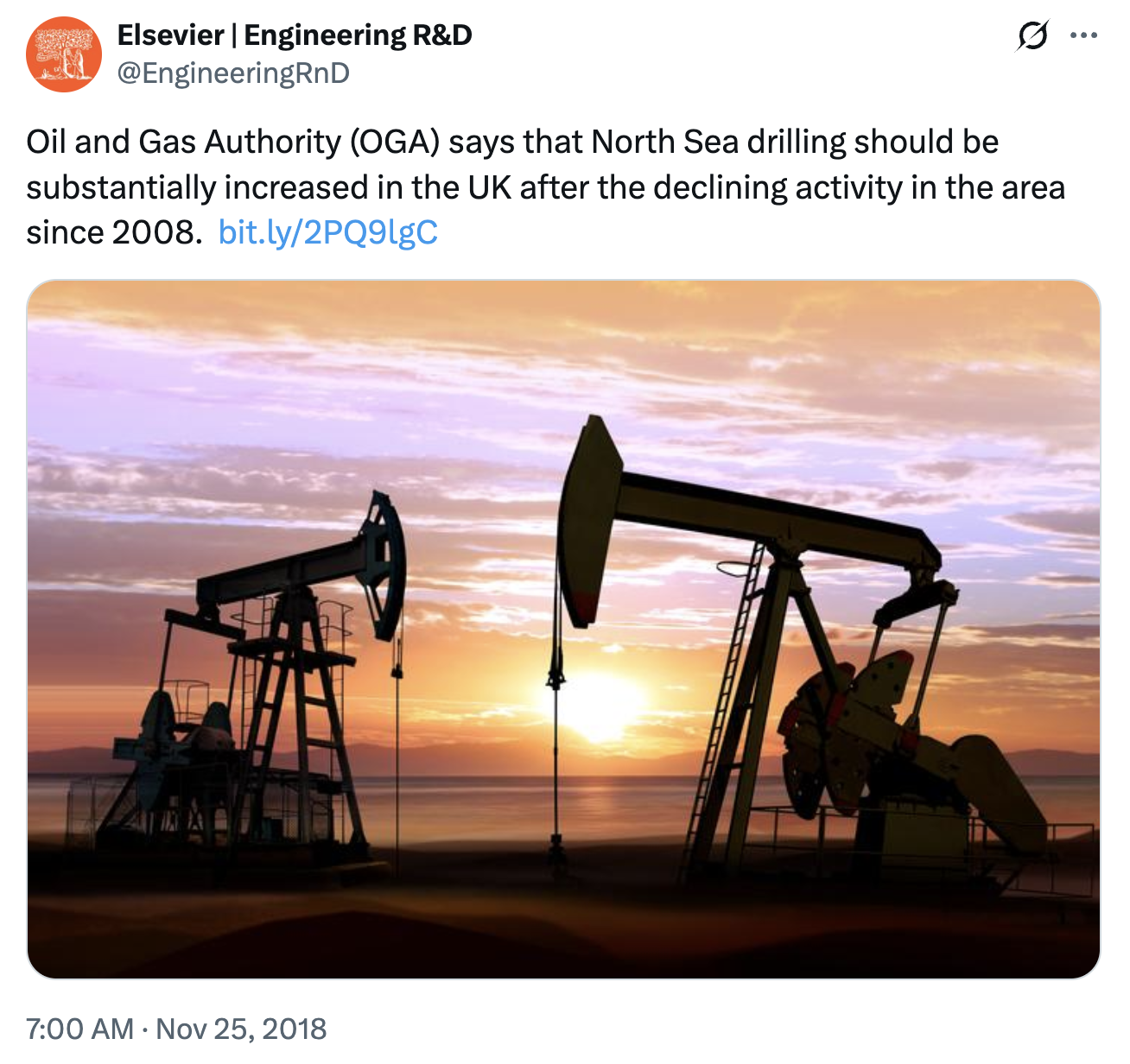
2018While publishing materials that enhance oil and gas exploration and extraction, Elsevier amplifies a call for the UK to “substantially" increase oil drilling through technology and collaboration. Elsevier collaborates with the American Association of Petroleum Geologists (AAPG) to improve productivity for global oil and gas exploration teams. Elsevier adds content from the Indonesian Petroleum Association (IPA) to Geofacets "to minimise exploration risk associated with upstream oil and gas research in the region." Geofacets offers exploration teams "access to 90 percent of the relevant unstructured published data and information used in the industry." As Shell faces multiple climate lawsuits pertaining to misalignment with the Paris Agreement, Elsevier invites its CEO to the first annual Elsevier Economics Lecture, where he promotes Shell as being “in step with society's drive to align with the Paris Agreement.” He claims that “in Canada, Shell has shown that CCS [carbon capture and storage] works.” Like other CCS projects, that project would emit far more CO2 than it captures. A RELX energy expo helps mislead stakeholders into believing that Shell is "transforming." Elsevier joins ExxonMobil, TotalEnergies, Saudi Aramco and others in sponsoring Geo2018, a Middle East geosciences conference and exhibition. LexisNexis seeks to "thwart threats and conquer the legal challenges involved with the exploration, production and sale of energy," with resources pertaining to hydrocarbon exploration and hydraulic fracturing.

2019The Production Gap report indicates the world is "on track to produce far more fossil fuels in 2030 than would be compatible with a 2°C pathway." Elsevier notes that "fossil fuels increasingly offer a poor return on energy investment," promotes the fact that "health is a basic human right," and that climate change is a threat to this right. Elsevier sponsors a conference focusing on "pressing topics in climate justice advocacy." The conference Chair and Director of the Centre for Climate Justice observes that "we cannot place our faith in future technologies to fix this problem." RELX states that “we believe the Paris Climate Agreement is our best hope for avoiding dangerous climate change…We support global efforts to mitigate climate change through the rapid reduction of greenhouse gas emissions.” (RELX Climate Change Statement). A new RELX policy says it's “committed to the protection of the environment, through the prevention of pollution [and to] minimising its contribution to climate change, in line with the scale of action deemed necessary by science.” (RELX Global Environment Policy)

2019 Elsevier promotes its content on ScienceDirect as being able to “help researchers and engineers drill further.” Elsevier markets one of its publications as a “go-to source” for oil and gas professionals, helping them “to drive the oil and gas market into deeper drilling depths.” Elsevier explains that it "enables entire exploration and development teams to gain a deeper understanding of petroleum systems and reservoir properties" (Elsevier Oil and Gas PDF) and it "helps oil and gas companies prioritize opportunities" (Journals List) and "increase productivity." (Oil and gas going green white paper) RELX sponsors an award given to LyondellBasell CEO Bob Pattel, described as “at the forefront of the global chemical industry’s flagship initiative to solve the problem of plastic waste in our environment” and a leader in the Alliance to End Plastic Waste; LyondellBasell actually “fights restrictions on plastic” and faces accusations of “greenwashing” that would prove correct. As RELX promotes oil majors as going "green," LexisNexis markets its guidance on transactions for new oil, gas, and coal projects, and promotes its guidance on constructing new natural gas facilities and/or pipeline infrastructure projects.

2020 The RELX SDG Resource Center platform, advocating "for better action to reach these goals,” promotes an article that states “banning new oil, coal, and natural gas projects” is one of "the most effective ways to stop future greenhouse gas emissions." The article cites the need for the largest oil majors to cut the amount of oil and gas they produce every day by 35% to meet the 1.5°C goal. With climate "the most critical problem facing humanity," the UNGC's principles are a "moral compass" for the company. RELX signs a letter calling on the UK government to ensure pandemic recovery uses the SDGs to inform actions putting "the health and wellbeing of current and future generations first."  

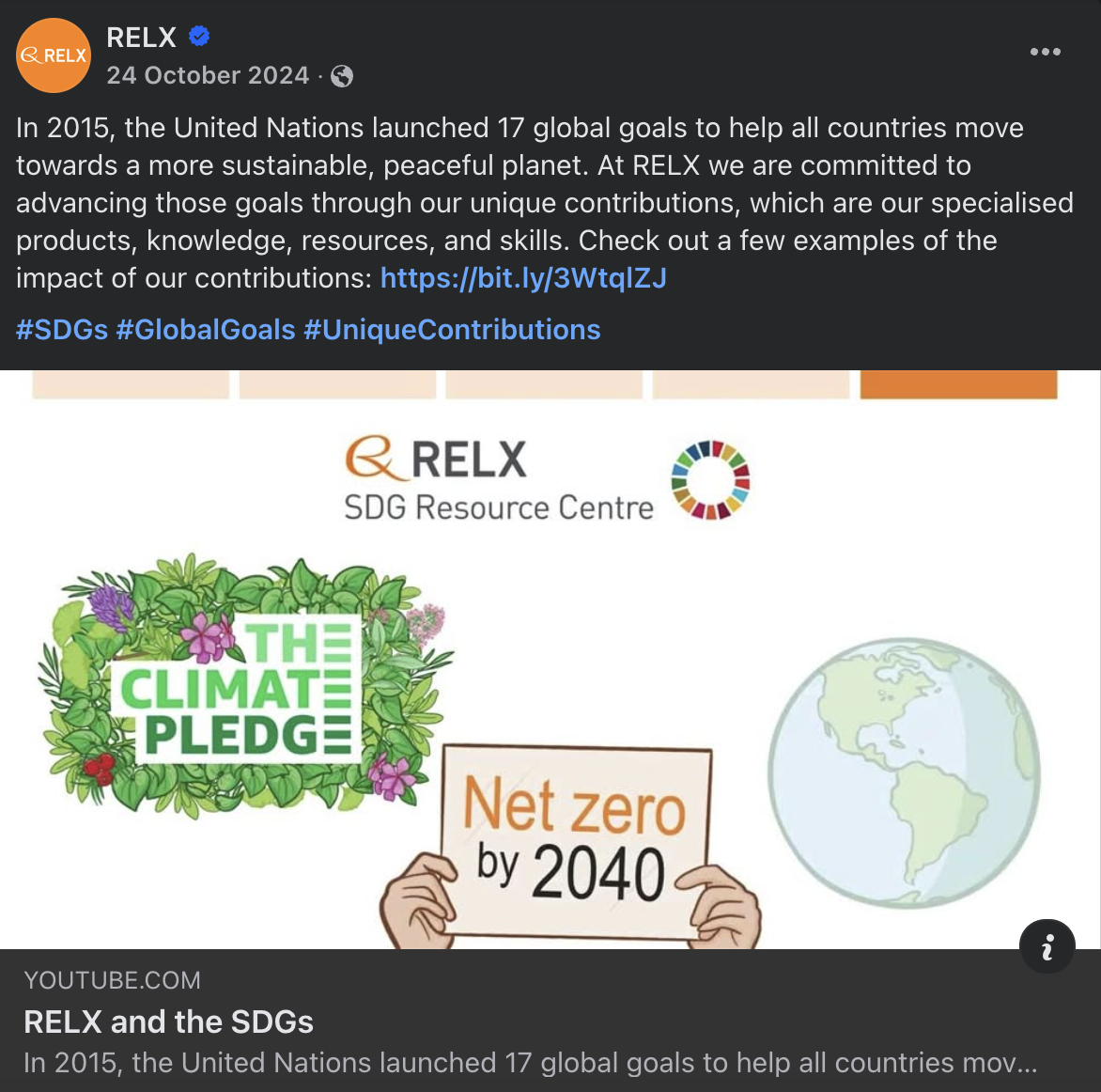
The United Nations explicitly states that “implementation of the [Paris] Agreement is essential for the achievement of the Sustainable Development Goals.” RELX promotes it’s “setting a science-based target in line with a 1.5° future” and doing its part “to meet the Paris Agreement.” Committed to backing "the global intention to limit climate change to well below 2°C," RELX states it will “implement science-based targets on climate and drive actions that are consistent with a 1.5-degree pathway to achieve net-zero.” (Climate Pact)

At an Elsevier Town Hall, an employee observes that the Company claims it's "ensuring that no function is conflicting with company sustainability commitments and objectives" and asks if the "REPAC political action is being audited and reformed to ensure alignment with the UNGC initiative, the SDG's, and other RELX commitments." The answer, given by Elsevier's Managing Director of STM Journals is no.

2020 An Elsevier fossil fuel E&P webinar explains that the company is good at helping partners and customers "find things that weren’t found before." An Elsevier presentation covers the use Geofacets to address challenges in hydrocarbon exploration. Elsevier promotes a partnership with BHP that enables it to rapidly respond to new E&P opportunities. LexisNexis provides practical guidance for those engaged in oil and gas E&P. One division (ICIS) sponsors an award given to Saudi Aramco's CEO, who expresses his hope for a post-COVID recovery in oil exploration and development investment. RELX's PAC supports Mitch McConnell, Roy Blunt, James Lankford, Steve Daines, Marsha Blackburn, Tom Cotton, and other U.S. politicians who block climate action, with some denying that global warming exists. Fielding internal concerns about RELX's support for such politicians, REPAC representatives decline to speak to questions of company policy compliance, instead focusing on positive aspects of the company, such as a matching donation program and allowing employees to use 2 paid days per year to volunteer. Regarding ICE contracts, the ACLU observes RELX is negligent of its human rights obligations. Activity such as the above remains absent from annual RELX Corporate Responsibility reports.

The same year Shell spends $10 million lobbying against low carbon transportation, a RELX expo features Shell as its "low carbon transport sponsor." Elsevier claims "Oil & Gas customers are gaining increasing value from ScienceDirect, with unlimited access to an ever-expanding library of interdisciplinary content across a wide range of subject areas." Elsevier's Managing Director of Journals—responding to internal concerns about the Company "speeding the expansion of new oil and gas exploration"—declares that "with our Elsevier program management around Climate we hope to exceed the Paris Agreement goals – including our tier 3 emissions. Think of major contributing factors such as paper and travel – if the rest of the world does that too, we make a real impact."

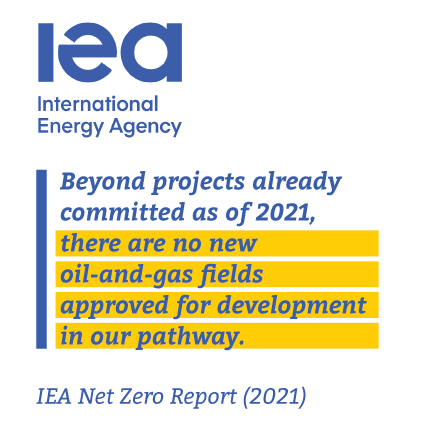
2021 The IPCC and IEA conclude new fossil fuel developments are incompatible with global net zero and Paris 1.5°C warming goals.

The UN Human Rights Council adopts resolution 48/13, recognizing “the human right to a clean, healthy and sustainable environment.” The Office of the United Nations High Commissioner for Human Rights states that the "climate change directly and indirectly interferes with the enjoyment of all human rights," and that it's the duty of businesses, under the UNGP, to discontinue "activities with potentially adverse climate change-related human rights impacts." RELX signs a letter indicating support for the idea that "corporate responsibility for human rights and the environment is a duty and not a voluntary matter."

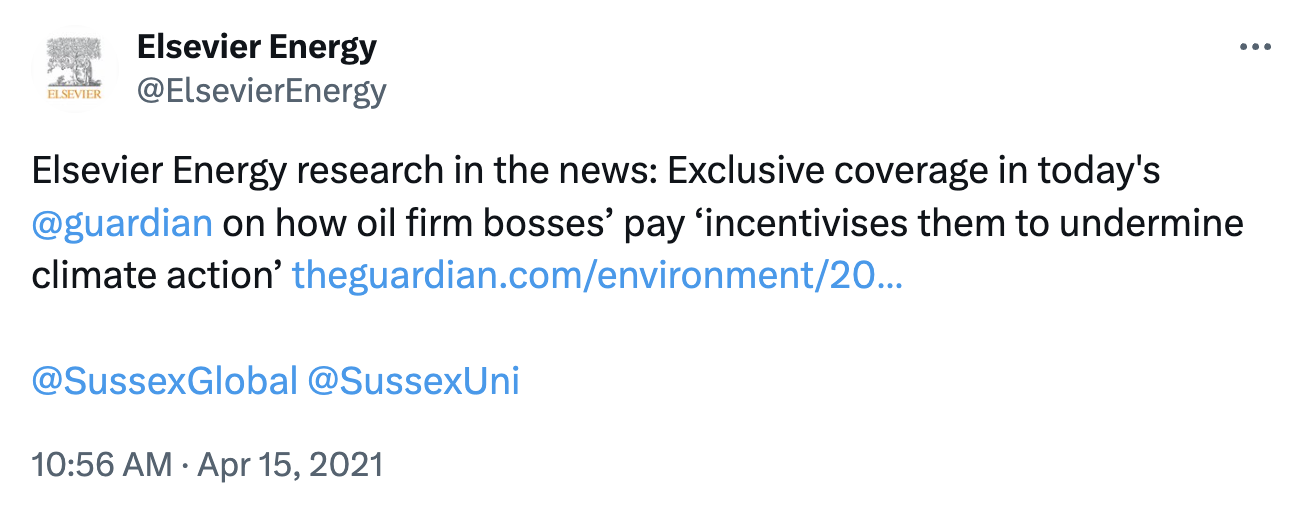
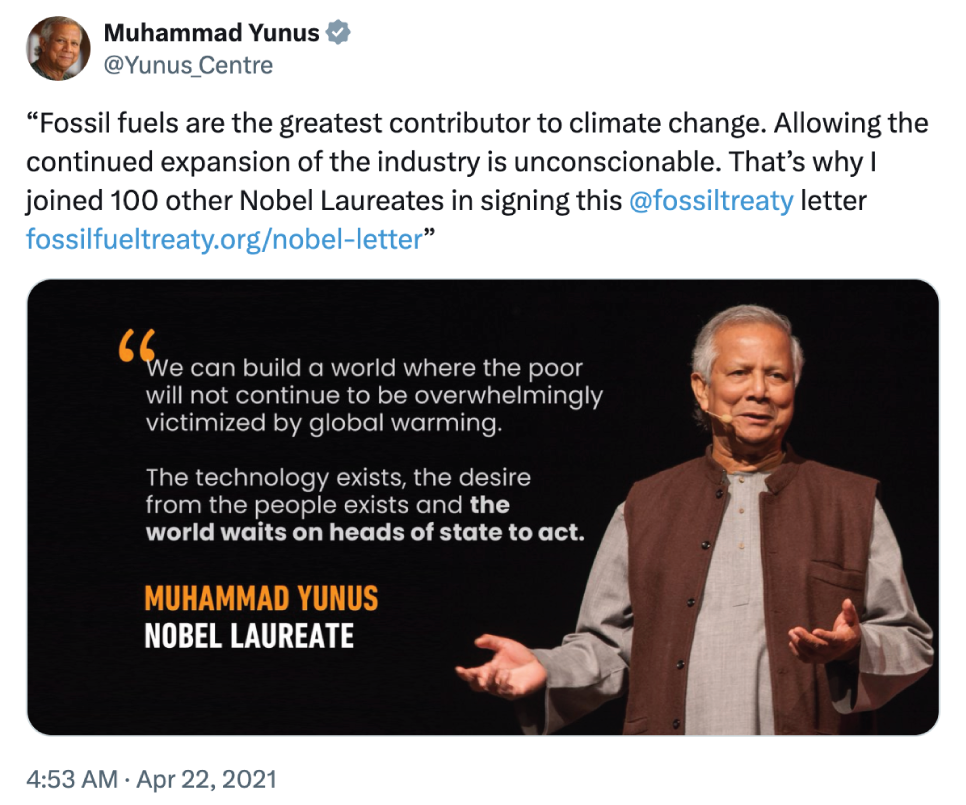
Elsevier joins the Climate Change Knowledge Cooperative and, as a member of the Publishers Association, Elsevier signs the “Publishing Declares” pledge to “join the global climate effort to limit warming to 1.5°C,” “safeguard our planet for future generations,” and “drive positive climate action wherever [it] can. Signatories set 1.5°C as “the maximum global warming level [it] will contribute to achieving.” Elsevier's Senior Vice President and Academic Ambassador states that one of the best ways it can contribute to climate action is "through what we publish." RELX's Head of Corporate Responsibility promotes the need "to wean ourselves off fossil fuel.” RELX markets a book chapter that calls for “the urgent need to replace fossil fuels,” highlights an article that concludes "the fossil fuel industry is...undermin[ing] climate litigation, regulation, and activism," promotes another that finds oil major leaders are incentivized to undermine climate action, and amplifies another that indicates, “to keep global warming well-below 2°C, fossil fuels need to dramatically decline.” Elsevier promotes a research paper that reveals how oil firm CEO pay incentivises them to undermine climate action. The keynote speaker at RELX's SDG Inspiration Day declares that "fossil fuels are the greatest contributor to climate change. Allowing the continued expansion of the industry is unconscionable." Over 200 health journals, including The Lancet, declare missing the 1.5°C target risks "catastrophic harm to health that will be impossible to reverse" and call for fossil fuel divestment.

RELX promotes it as being “about data that makes a difference” and “using [its] products and services to advocate for climate action." A leader Claims that RELX "one of the most sustainable businesses in the world,"

A LexisNexis Practical Guidance publication observes that "the IEA [net zero roadmap] needs no new investments in coal, oil or gas supply beyond projects already committed to as of this year…Companies that use old IEA scenarios without addressing this...run the risk of being seen as outdated by their investors and potentially by regulators as well…More than one company is likely to get caught having a litigation or lobbying strategy that clearly conflicts with its public ESG disclosures." A group of employees submit nearly 20 question to RELX's REPAC through Human Resources; some questions address how its lobbying approach contradicts the Company's stated policies and values given its support for politicians obstructing climate action. In a subsequent meeting, PAC board members decline to answer any of these questions and instead focus on recruiting new PAC members and donations from those who are in attendance.

2020: Elsevier promotes a project of Equinor, Shell and Total as being "vital to reach the global climate goals of the Paris Agreement." CCS is "magical thinking" promoted by the industry to justify fossil fuel expansion and the project's reality is that "the carbon injected would amount to less than one tenth of 1 percent of Europe’s annual CO₂ emissions from fossil fuels in 2021."

"We should be building more [coal plants]...We should be expanding exploration for oil and gas."

Senator Tom Cotton, United States
Financially supported by RELX's Political Action Committee (REPAC)

The Editor-in-Chief of the Lancet condemns his employer's support for climate sceptic U.S. politicians: "I can’t defend it.”

2021: Muhammad Yunus, a Nobel Laureate firmly opposed to fossil fuel expansion, is a Keynote Speaker at RELX's SDG Inspiration Day.

As noted in a subsequent legal filing, an April 2021 employee ethics complaint is filed, along with an accompanying report that was drafted with input from a sustainability journal editor. The complaint notes that, despite RELX's statements and policies, the company is engaged in facilitating a massive increase in fossil fuels, sometimes in collaboration with companies accused of various environmental and human rights crimes. The company is informed that avoiding the harms associated with 1.5°C overshoot requires "ceasing investments in new fields, stopping production of new reserves, and starting the phase-out of some existing production." RELX fails to provide the reporter with a knowledgable and independent investigator per Company guidelines and on July 14, management introduces a communications restriction on the reporting employee; it prohibits the sharing of Elsevier's marketing materials, as well as paywalled papers, without the permission of the The Lancet's Managing Director and RELX Corporate Responsibility. Various marketing materials are subsequently removed and websites altered. The subsequent legal filing frames RELX's ethics investigation as a "sham" and the action "a disguised threat." RELX Corporate Responsibility is unwilling to define how large the scale of projected premature deaths would need to be in order for RELX to consider discontinuing products and services associated with such negative impacts. The editor-in-chief of The Lancet steps down from Elsevier's "internal climate board," later calling it "a corporate greenwashing initiative," and adding: "I still don’t see how RELX can claim to be a supporter of climate action while engaging financially and politically with anti-science advocates.” (2022 employee report)

A group of employees report to the company that it's acting contrary to its environmental and human rights claims and commitments. Including editors at The Lancet, The Lancet Planetary Health, and One Earth, the employees note the company can't serve the interests of fossil fuel majors while also claiming to be responding to the climate emergency "at the scale deemed necessary by science." They also point to UNGP guidelines, which include the need to discontinue “activities with potentially adverse climate change-related human rights impacts." Despite highlighting “lethal ramifications for hundreds of millions of people just this century,” the company does not find there to be any violations of company policies. No Company messaging—including promotion of the oil industry as 'going green' and 'transitioning'—is determined to be false or misleading. Leaders are asked to provide evidence as to how global fossil fuel expansion could still be compatible with the language of its climate and human rights commitments or a 1.5°C warming target; to substantiate the claim made to employees that the industry Elsevier serves is "heavily motivated" to make a transition; to indicate which publics were consulted regarding engagement in the business activities in question; to share what the company considers to be prohibited under its climate and human rights commitments; and to share how large the projected loss of life would need to be for the company to consider the business activities in question antithetical to its commitments.

10 business, climate, and human rights questions are submitted to Cell Press' Senior Management Team in the report. These include asking if "the company [is] adequately providing information to investors and the general public that is sufficient to accurately evaluate our involvement in climate change-related human rights harms," as well as one seeking clarity on the Company's commitment to the OECD non-retaliation guideline to “refrain from discriminatory or disciplinary action against workers who make bona fide reports to management or, as appropriate, to the competent public authorities, on practices that contravene [our] policies.” Company managers are unwilling to answer any of the questions or act on the request for RELX to end deceptive messaging and to provide employees with a timeline for when the company will end its dangerous support for fossil fuel expansion. Sustainability and Compliance officers are unable or unwilling to disclose what RELX's Ethics Code actually prohibits. (2022 employee report)

In a RELX podcast "about the energy transition required to meet the Paris Agreement," RELX Corporate Responsibility promotes CCS (“Oil and gas is still - the world is too reliant upon [it] but will decrease with time, it needs to be accelerated. So there will be a need for CCS.”) and asserts that oil production “helps with the economic development” in Africa. Guest Trevor Letcher pushes back on her points: “We don’t really need much CCS...we don’t actually need it for oil and gas powered power stations because they should be stopped…keep the oil in the ground. I’m sorry, but I get the feeling that CCS is being supported strongly by the oil companies because they want to be kept in business. CCS is a great thing. It’s difficult to do…the whole thing is fraught with difficulty and the less CCS we have the better. We must have it for things like cement factories. Getting back to your comments on Africa…I’m sorry, but I still feel that even in Nigeria they should be focusing on new forms of energy, and that is solar and wind. The oil should stay in the ground, I’m sorry…I hope I’ve helped you on the Africa situation.” Dr. Letcher goes on to promote degrowth as the only thing that will save us: “It is the most challenging task that humanity has ever faced, to try and stop sending CO2 into the air. And I’m afraid the oil companies must realize they are to blame...Keep the oil in the ground. The trouble is the oil companies are so big that their lobby is enormous. They would get all sorts of people on their side to keep their business going.”

2021 A RELX website claims "momentum has swung decisively in the favour of embracing sustainability in the hearts and minds of O&G decision makers at the highest levels" and promotes the "sustainability and decarbonisation" efforts of its petrochemical partners and customers. The RELX Board reports that it has also taken "strong climate action" in 2021, but somehow it "has found climate change has no material impact on RELX’s business in the short term and will be unlikely to have a significant impact in the medium and longer term."

Human Resources and a Cell Press Senior Manager deny a request to disclose Elsevier's fossil fuel activity to prospective employees in a job post, partially under the premise that there isn't consensus that new fossil fuel projects are objectionable. A sustainability journal editor is "not surprised" but finds the reasons "very poor." (2022 employee report)  

"There’ll always be laggards…those that are engaging in activities, maybe, without thinking about the full impact of what they’re doing."

Márcia Balisciano, RELX Head of Corporate Responsibility
TetraNoodle Podcast (2021)

"You have assessed many RELX business activities that work against our climate pledge."

VP of Elsevier's Internal Climate Sustainability Program, a 2021 insight included in a 2022 employee report (Jan 6, 2025 legal complaint, Exhibit E).

"I am surprised you are not allowed to share paywalled papers internally, sure all RELX employees have (or could have) access anyway."

Sustainability journal editor-in-chief, learning of one of RELX's initial communications restrictions (2021)

September 2021: Elsevier promotes an article that champions the merits of AI and Machine Learning for "profitable strategies" to "greatly boost the exploration of oil." Come 2025, RELX would claim such technologies are serving the industry's 'transition.'

"We abide by the environmental policies we set and the external initiatives to which we are signatories."

RELX Corporate Responsibility officer
November 2011

"The Company ha[s] not made any false or misleading statements."

RELX Ethics officer
December 2011

The Guardian, February 2022

Elsevier promotes a company tree planting event made possible through employee donations. February 2022

"A corporate greenwashing initiative."

Dr. Richard Horton, Editor-in-Chief of The Lancet, describing Elsevier's 'internal climate board,' from which he resigned in 2021. Included in a 2022 employee report on the company's greenwashing strategies (Jan 6, 2025 legal complaint, Exhibit E).

ABOVE: Images from a report submitted to the Company in April 2022. From the report: "Based on the Company’s interpretations, RELX’s environmental and human rights pledges don’t prohibit the Company from committing ecocide or serving and doing business with those that are doing the same. Various environmental and corporate social responsibility (CSR) policies and statements are thus observed to be false and/or misleading, violating the Company’s Ethics Code, Operating Principles, and other standards of conduct."

"Leadership demonstrated its desire to frame and control the debate when one of the members from the Internal Climate Board discouraged any individual environmental advocacy at the Company...merely acknowledging the priorities of profit and managing company image are forbidden, rendering an honest and open dialogue around these issues unlikely; doing so would undermine the effectiveness of symbolic messaging."

April 2022: Observation from an employee report (Jan 6, 2025 legal complaint, Exhibit E).


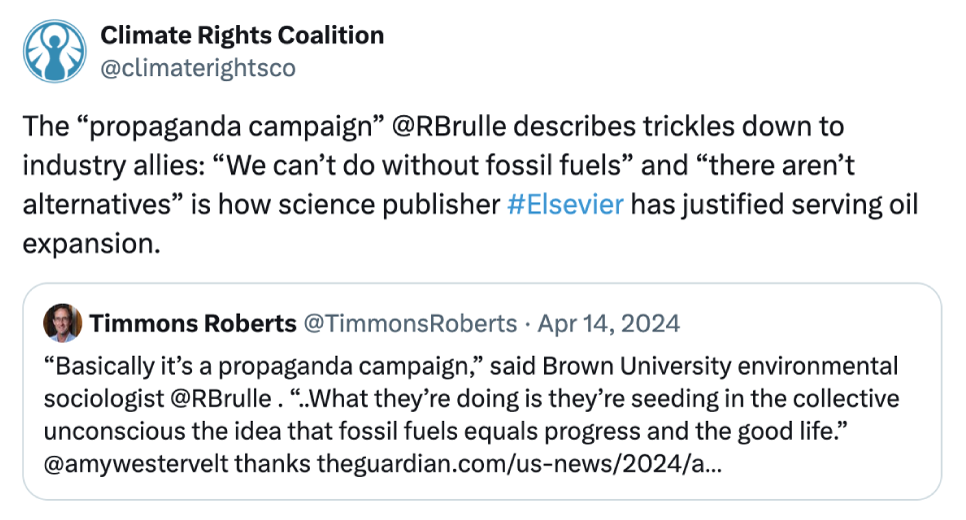
2022 The company publicly declares it is "not prepared to draw a line between the transition away from fossil fuels and the expansion of oil and gas," activity that "drags us towards disaster." Addressing Cell Press employees, management dismisses these concerns: We cannot, kind of, do without fossil, um, fuel, um, you know, uh, right now, there [are] not alternatives.” A request is made to issue a clarifying correction, but none is made. This concern is raised through a reporting channels.

Following the Guardian article, a letter is sent to all external editors, assuring them of the Company's "profound, science-led and comprehensive commitment" to addressing global heating. The letter emphasizes Elsevier only has a "small number" of journals "covering fossil fuel related topics" and that "fossil fuels will be in the mix for several decades to come." The communication does not disclose the fact that the vast new fossil fuel expansion projects being informed across many Elsevier journals and other RELX products have no place in just transition pathways.

2022An Elsevier employee group report submitted to leadership titled Fueling the Crisis: Defensive Stigma Management Techniques at Elsevier and RELX contains the following abstract: "This report examines the response of Elsevier and RELX to internal advocacy conducted by employees regarding the Company’s failures to adhere to its environmental policies and pledges. As a large MNE (multi-national enterprise) with business goals that include the generation of significant production gains for the fossil fuel industry, RELX publishes research that indicates these fossil fuel aims are entirely incompatible with the Company’s climate goals. Research also indicates the voluntary policies, initiatives, and communications strategies that RELX has embraced are widely utilized by large MNE’s as tools for impression management of stakeholders that enable companies to conceal substantial negative impacts and resist reforms or changes to their operations that would hinder revenue generation. While Company performance of CSR (corporate social responsibility) includes ethics guidelines that prohibit false and misleading statements, the Company has neglected to directly address employee concerns about use of deceptive policies and communications that include the amplification of fossil fuel industry misinformation. The misleading of stakeholders generates a false consciousness regarding CSR, the Company’s attitude towards the climate emergency, and the capacity of it and other large MNE’s, due to their legal-economic structures, to refrain from business activities that are fueling the environmental crisis that is presently unfolding...Serving the current aims of [the fossil fuel] industry inhibits RELX’s ability to sound the alarm about what these companies are doing, and how RELX’s business with them will have increasingly severe ramifications for the health of society and the planet. Despite the Company’s commitment to achieving business goals 'in an open, honest, ethical, and principled way,' leadership has been unwilling to openly confront the reality that the fossil fuel activity RELX is engaged in cannot realistically be a part of a world that stays below 1.5°C warming or acknowledge that environmental policies that permit the Company to participate in ecocide are fundamentally misleading. The inability of CEOs and other leaders across RELX to comply with both environmental policies and ethics guidelines underscores observations in the literature regarding the misleading nature of symbolic CSR tools and their ineffectiveness in bringing about the transformational changes that such MNEs claim to be striving for, but that commercial considerations compel them to resist."

The report also expresses the concern that the company's focus on information suppression following an ethics complaint is "a response to greenwashing concerns that an editor-in-chief at an Elsevier journal described as 'intimidation.'"

Following this report, Richard Horton finds it "more than disappointing that the tone of the replies [from Elsevier leaders] was so defensive," finding it "perfectly reasonable" for employees to be "filling an information gap and identifying word-deed misalignments." A company manager contacts employee advocates, stating that leadership has already engaged on the concerns being raised and urges them to "disengage from the [advocacy] group...undermining the voluntary participation and collaboration of employees who stood up to advocate for the global environmental crises."

Elsevier promotes that the Company "encourage[s] research on all aspects of the energy transition." Fuel is referenced as being "linked to the SDGs," despite this product still informing broad fossil fuel expansion. An Elsevier sustainability leader is asked to provide employees with evidence to show the company isn't generating "potentially adverse climate change-related human rights impacts." In response, employee advocates are assured that the company is "ensuring the content, products and data insights we generate help the energy transition."

"I checked with Richard [Horton] too – he is happy with this addition. By the way, he also mentioned that he was asked to remove his name from your list in the report – this is a bit sinister, but perhaps you have heard this from others too?...He just thought you might want to know."

September 2022: An editor at The Lancet

Fall 2022: Company leaders prohibit employees from distributing a report that contains urgent insights from scientists regarding the company's misleading claims. From the report: "Scientists—including experts at our own journals—have concluded that our company’s involvement in helping the fossil fuel industry expand production renders various pledges and statements inaccurate, misrepresents climate science, and accelerates climate change...our company has continued claiming that the industry is credibly 'transitioning,' while simultaneously altering and removing content from our websites that indicates complicity in what are being called crimes against humanity." While offering input for the report, Richard Horton is pressured by management to remove his name from it.

October 12, 2022

"Pledges made by RLEX 'include membership in the [United Nations] Race to Zero campaign, which has set a deadline of June 15, 2023 for members to halt the facilitation of new fossil fuel assets and to ensure that all external engagement activities are aligned with reaching the global net-zero goal.'" (Common Dreams)

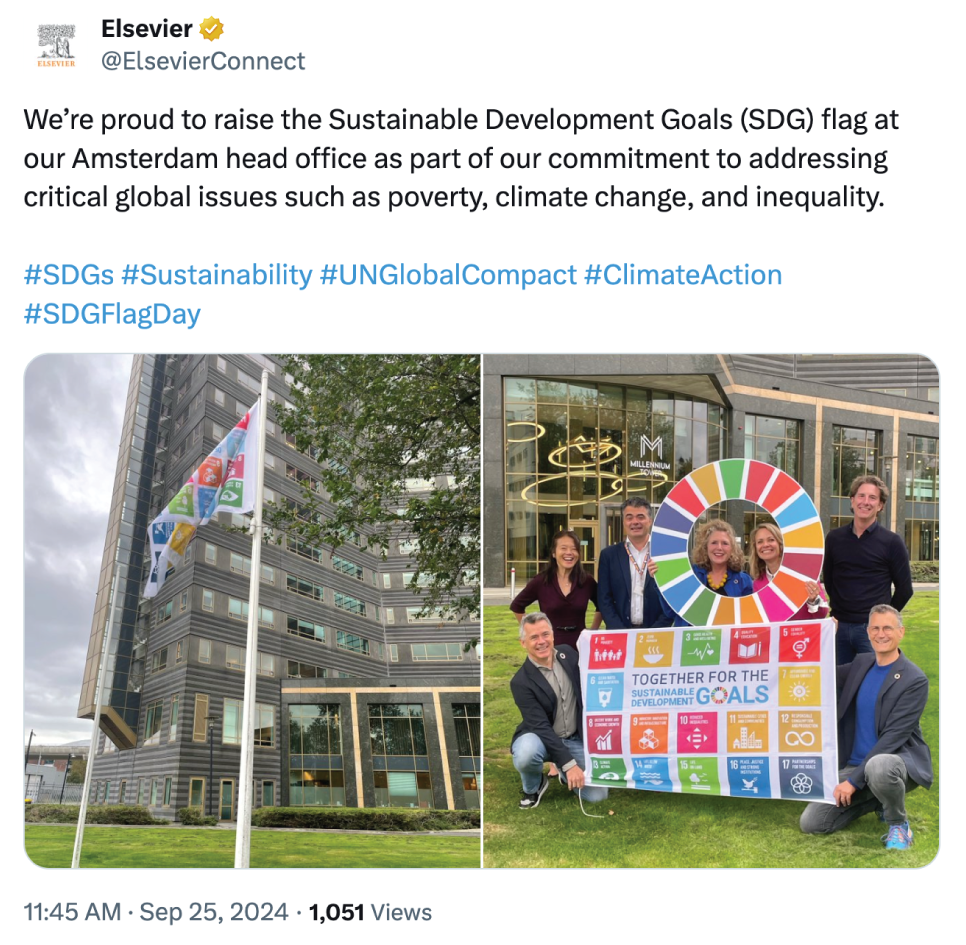
2022: RELX/Elsevier continues to co-opt the language of activists ('Every part of our society must change.'). As the Company promotes fossil fuel expansion and misinformation, its leaders claim its actions are "science-based."

2023: As scientist groups call on the company to stop greenwashing, Elsevier promotes a discussion on "taking sustainability seriously."

April 2023: Investor: "The scientific community's advice is to stop new oil and gas exploration to keep the world in a safe place. So how can you justify this part of your business?"(RELX AGM)

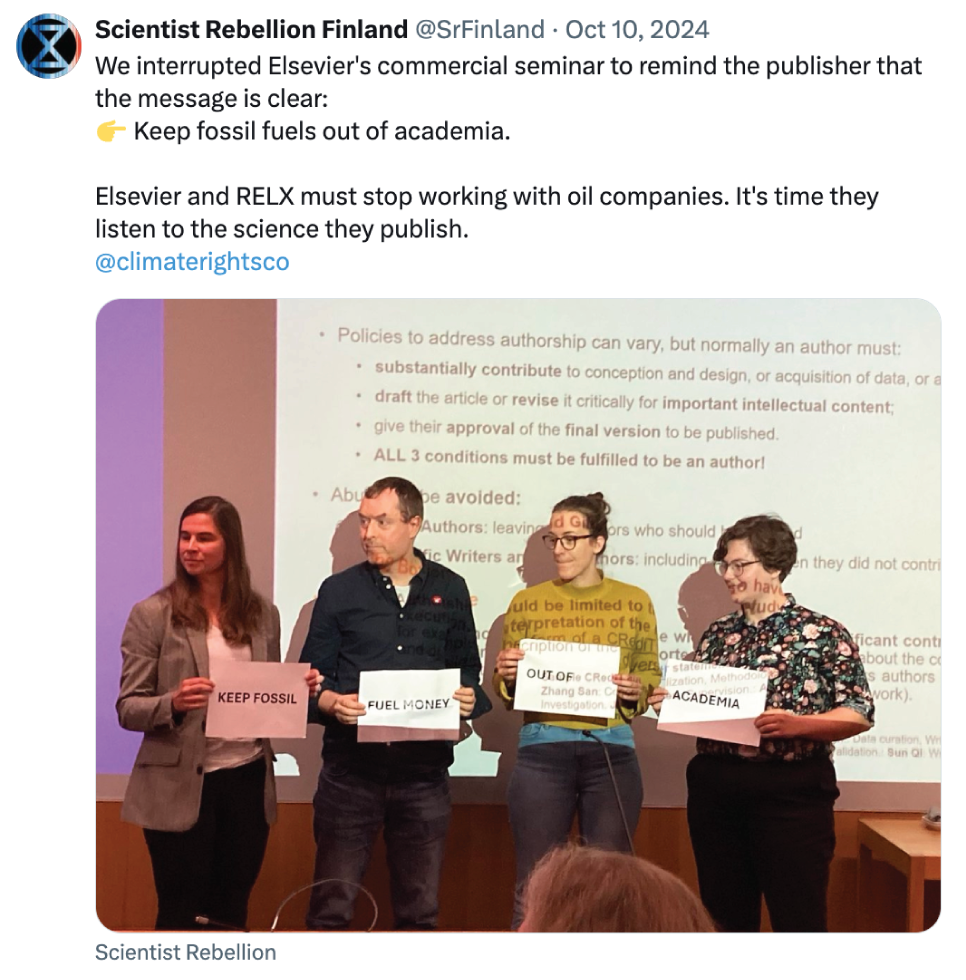
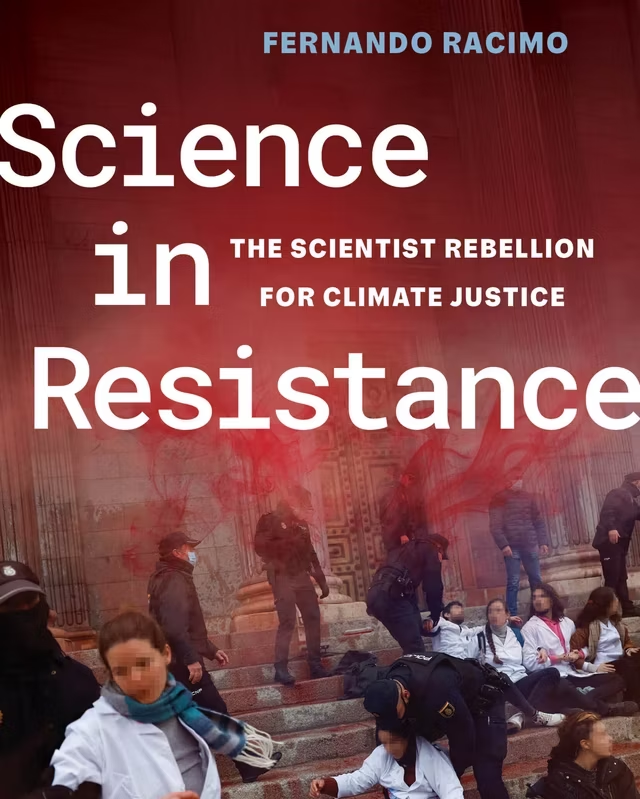
Scientists protest at RELX UK Headquarters (April 25, 2023)

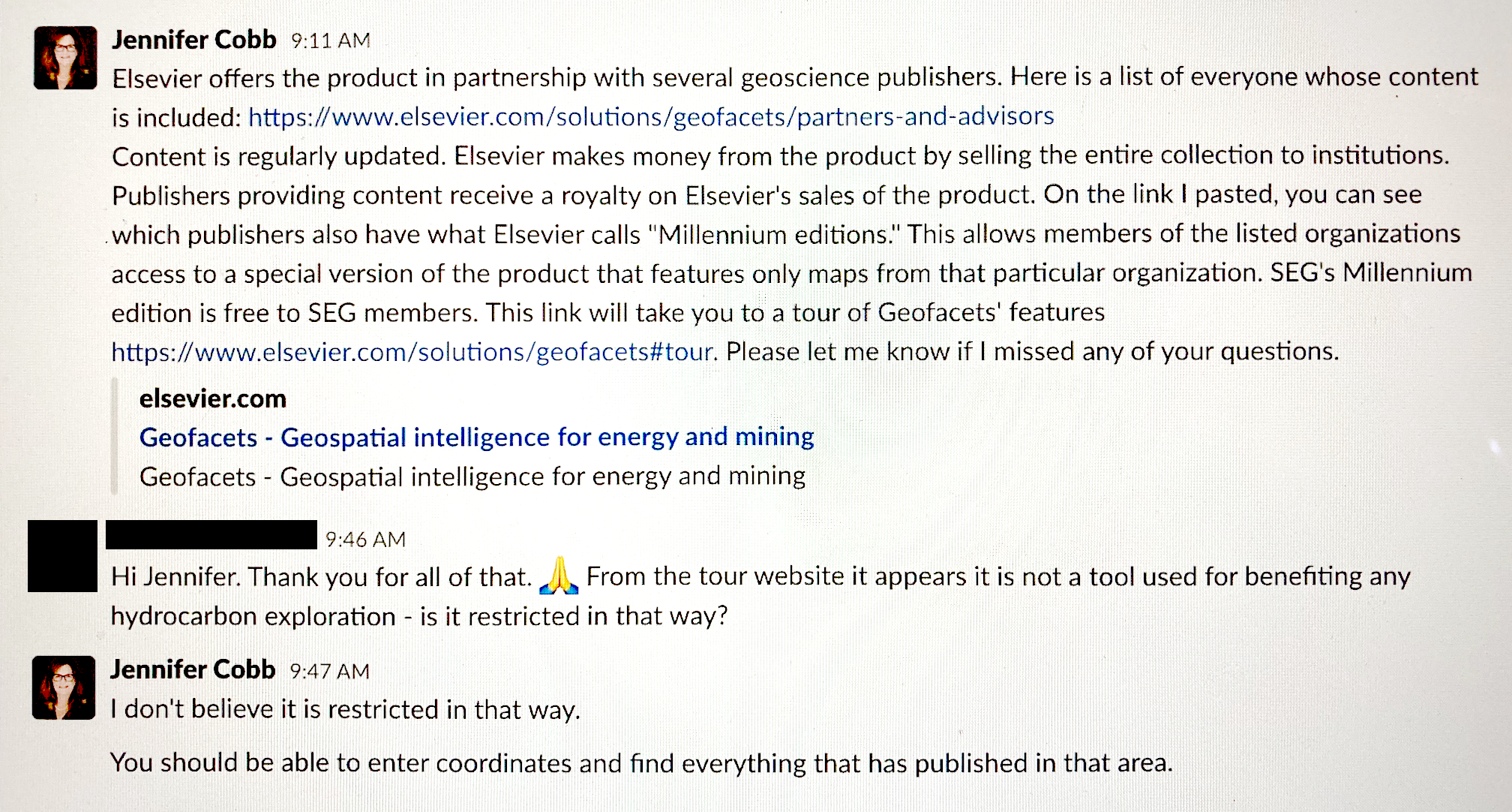
After RELX informs investors that Geofacets has been 'repurposed,' a manager at the Society of Exploration Geophysicists (SEG) confirms that the product can still be used in service of fossil fuel expansion (May 2023)

RELX (LexisNexis) promotes these oil majors as "powering the energy transition," omitting that each have business plans misaligned with a livable future.

2022 Richard Horton of The Lancet approves this addition to a new employee report: "The Lancet—as a founding member of the UK Health Alliance on Climate Change (UKHACC)—has also called for ending the expansion of any new fossil fuel infrastructure and production." Another editor at The Lancet requests the report reference this Fossil Fuel Treaty letter.

Richard Horton reports that he's being pressured to remove his name the employee report. After requesting his name be removed, he claims he's been told “by the highest authorities in Elsevier that the company is progressively divesting itself from the oil and gas industries." Elsevier simultaneously joins the OSDU Forum. Founded by oil and gas majors seeking an open data platform to "enable them all to be more efficient and effective in finding oil deposits," OSDU is called a “game changer” built “to resolve the problems of accessing complex E&P data." OSDU Forum oil majors have business plans antithetical to net zero pathways, warming targets, and a science-based, just transition. Fellow members such as Aramco, BP, Chevron, Equinor, Exxon, Petrobras, and Shell are fighting an energy transition, remain severely misaligned with the Paris Agreement, and have CCS (carbon capture and storage) projects that increase oil production. One partner is lobbying to extend one of its coal mines for over 90 years. These businesses are sabotaging all seventeen SDGs, but Elsevier continues to claim it's supporting its partners and customers in their "energy transition." RELX's UN Global Compact Communication on Progress fails to reveal that Elsevier has joined the OSDU Forum.

OSDU FORUM INFO (PDF)

An editor at One Earth who contributed to multiple reports is informed that management "continues to make inaccurate claims about the company and the science," and that he's "being pointed to as backing up the company’s positions." On September 27 company managers are again asked to provide “the research and data that Ethics, Compliance, CR, and others are using to conclude that [RELX is] accurately following our statements and pledges.” None is ever provided. On October 13, CEOs across RELX are asked about negligence of UNGP commitments to discontinue "activity with adverse climate change-related human rights impacts which may be directly linked to our operations, products or services [and] obtain free, prior, and informed consent from potentially impacted people prior to taking actions likely to have climate-related human rights impacts.” In response, a leader forbids any sharing of the new employee report (Exhibit D) containing scientist testimonials related to the Company's stated unwillingness to end support for fossil fuel expansion.

Another complaint is made on October 14 through official ethics reporting channels regarding management's use of false claims, gaslighting, and inappropriate pressuring to accept company greenwashing practices and to disengage from advocacy that's independent of management. In late October, the use of intimidation tactics targeting employee advocates and the use of false claims are brought to the attention of RELX Compliance and Ethics. The concerns about "psychological safety in the workplace, including harassment" are dismissed "on the false grounds that they had already been addressed."
RELX promotes the idea that "sharing knowledge is a human right, and tackling the climate crisis requires the rapid exchange of knowledge across geographic, economic, and disciplinary boundaries." Yet WIRED reports that "companies like RELX prevent us from seeing critically important information that’s supposed to be public...about pressing problems like climate change and the COVID pandemic. Paywalling factual studies and news stories creates an informational void that the public fills with misinformation, and even conspiracy theories. As journalist Nathan J. Robinson depicts the problem caused by companies like RELX, 'the truth is paywalled, but lies are free.'" RELX promotes its strong ESG ratings as part of its 'corporate responsibility' credentials, despite researchers observing that ESG ratings providers predominantly define ESG as "the impact of environmental and social risks on financial performance" and that "ESG ratings have low associations with environmental and social outcomes." The Center for Media and Democracy reveals RELX is one of the companies that is "both pursuing ESG principles and making donations to RAGA," a group of U.S. state attorneys general that's "hyper-focused on eroding air and water regulations, promoting fossil fuel companies, and using state governments to punish companies that try to limit their climate-related risks by divesting from oil, gas, and coal."

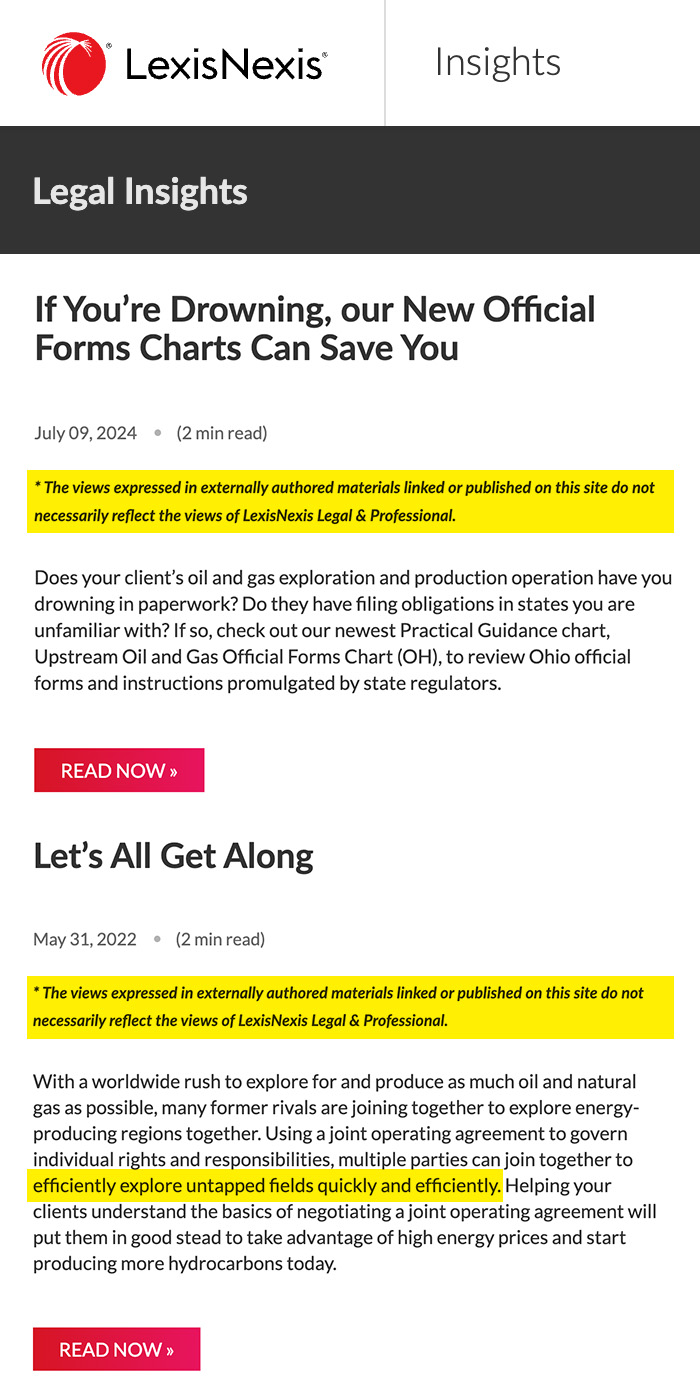
Despite LNG projects being as bad as or worse than coal, RELX describes LNG as being one of the "building blocks for change" in "decarbonising the economy." RELX (LexisNexis) facilitates new lease transactions for E&P companies "rushing to lease acreage and drill additional wells" and informs the "worldwide rush to explore for and produce as much oil and natural gas as possible." RELX amplifies a Shell leader's observation that the “key barrier” to low carbon transitions in mobility is infrastructure, something Shell actively lobbies against. RELX also amplifies Shell's call for expanding natural gas resources—defined as "clean"—for the purpose of achieving net zero. Elsevier is listed, along with Saudi Aramco, Shell, and Chevron, in sponsoring the American Association of Petroleum Geologists’ Imperial Barrel Award, a subsurface basin evaluation program. RELX (RX) promotes its mining exhibition QME as facilitating increased productivity for Australian coal mine operators. RELX (ICIS) sponsors the ICIS CEO of the Year Award, given to Dow CEO Jim Fitterling, who's described as “leading the charge on decarbonisation and sustainability.” Fitterling has denied that plastic is toxic in order to stave off regulation and Dow has recently settled allegations of violating the U.S. Clean Air Act for excess emissions of harmful air pollution. As it continues to publish books that serve oil and gas expansion, a RELX (ICIS) online publication suggests “changing the emotional perception of fossil fuels” to help correct “underinvestment in fossil fuel E&P.”

2022  As a founding member of the UK Health Alliance on Climate Change, flagship journal The Lancet calls for ending the expansion of any new fossil fuel infrastructure and production, phasing out existing production fairly, and fast-tracking real solutions. Carbon capture and storage is labeled a "false solution" that does "little to protect health and introduce[s] new risks."

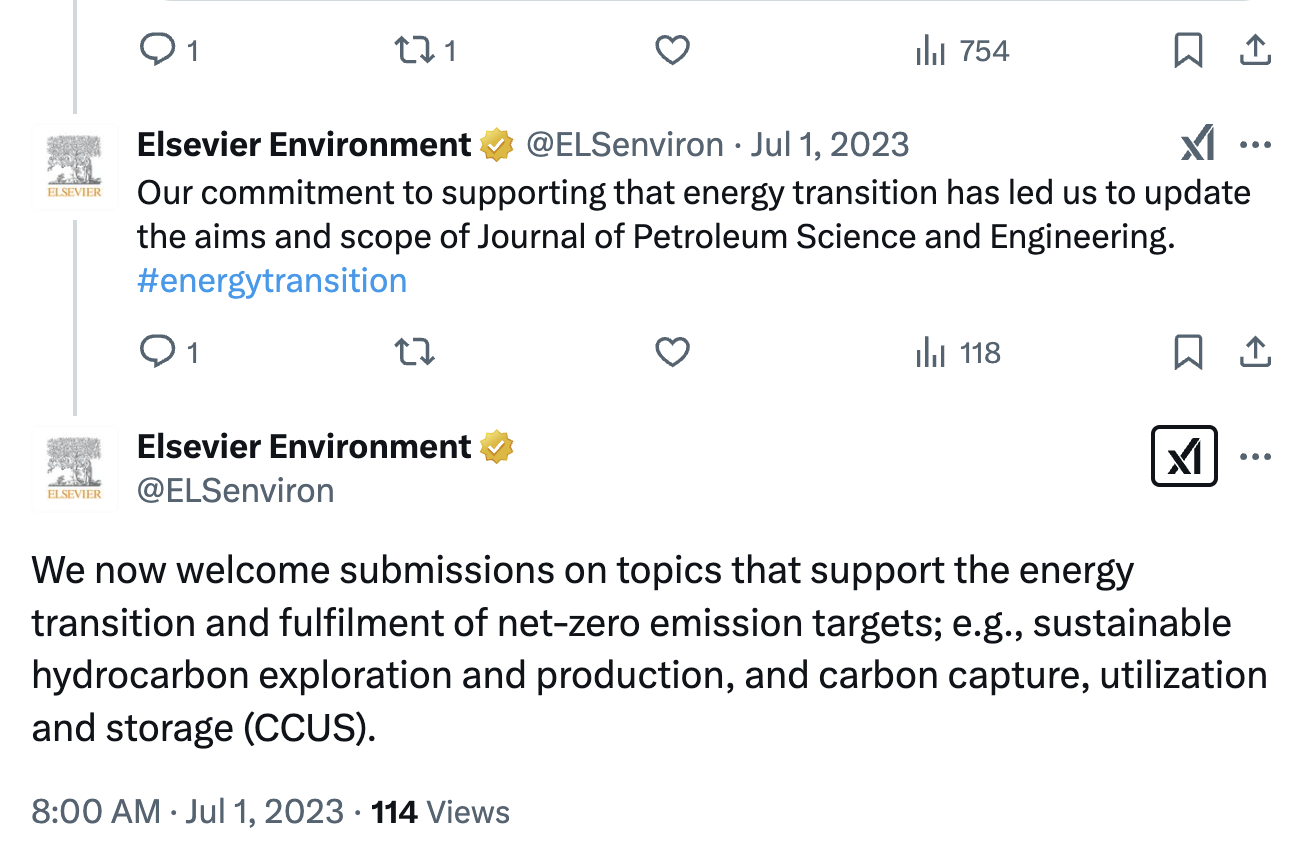
The 2022 RELX annual report, considering a "business as usual" scenario marked by rising sea levels, political instability, and "significant health impacts," notes that "sentiment may favour organisations such as RELX that have taken action to limit the impact of climate change." It also states, "Leadership made the decision to close one hydrocarbon journal and transition remaining titles with updated aims and scope."

RELX maintains it "carefully vets potential customers...before allowing them to access its services" and boasts that the company’s "been recognized by the ratings agencies that rank companies based on their environmental, social and governance (ESG) performance.” RELX's head of corporate affairs “has ensured the company focuses on practical actions rather than rhetorical commitments…The company has installed waterless urinals in its New York building as well as sinks with stoppers and automatic taps that flow for six seconds rather than the usual 15.”  

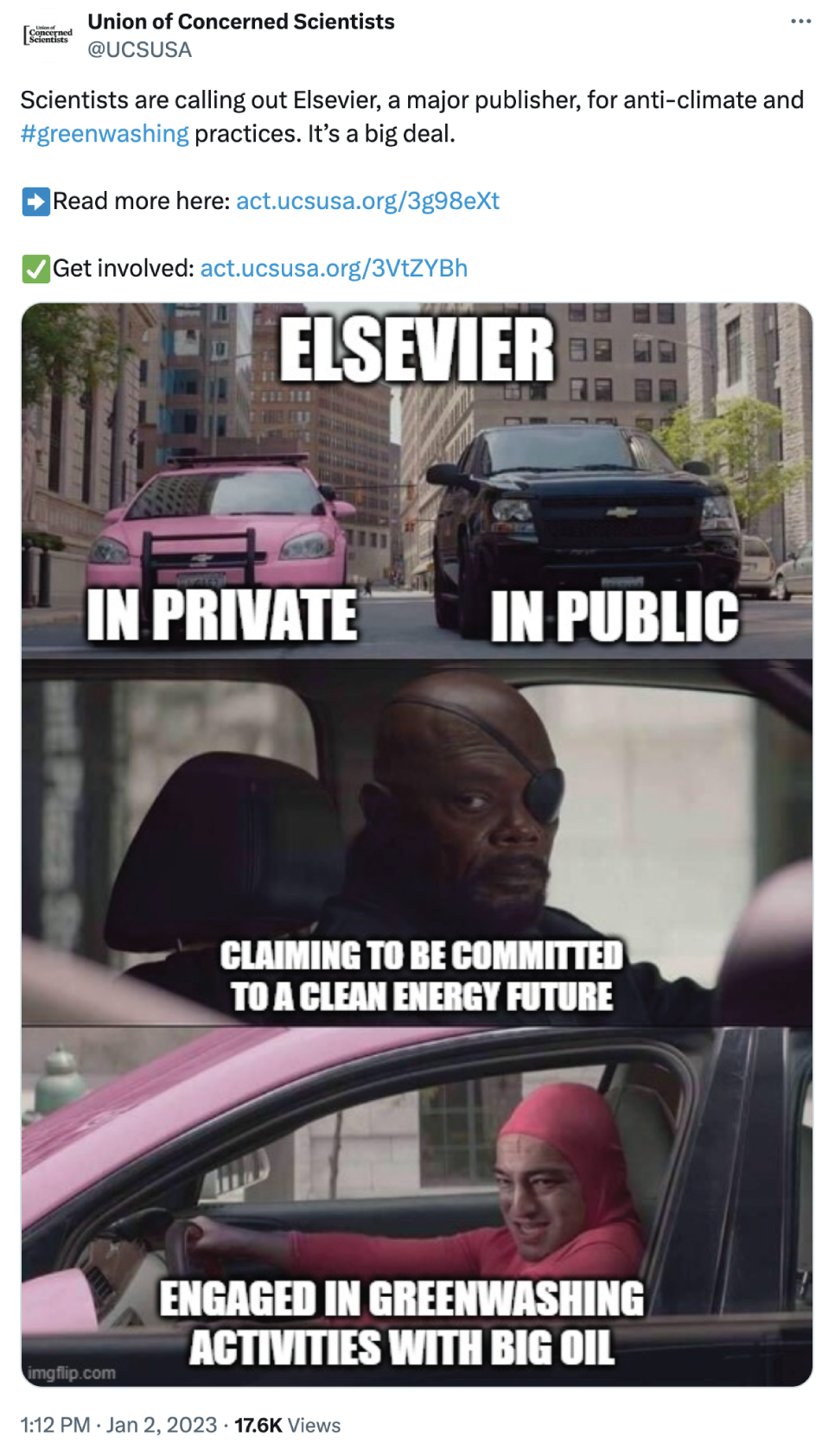
Observers are critical of the UN Global Compact, as it assumes members such as Shell, TotalEnergies, Equinor, and BP are voluntarily adhering to the principles without any oversight. RELX maintains membership another UN initiative, Race to Zero, which recognizes a 1.5-degree pathway requires the "phasing down and out" of fossil fuels and indicates members must end "facilitation of new unabated fossil fuel assets" in line with IEA and IPCC scenarios. The Union of Concerned Scientists and Scientists for Global Responsibility launch a petition requesting the company address inconsistency with its sustainability claims, the UN Global Compact, UN Race to Zero, and the UNGP. An associated blog post observes that company practices "are incompatible with the claims Elsevier makes about its commitment to climate action. In fact, this is what inaction on climate change looks like. It’s what greenwashing looks like."

An Elsevier sustainability leader is asked internally "if the company plans to withdraw from its Race to Zero pledge given that both Elsevier and RELX have taken actions that indicate no intention to honor its pledge." The company opts not to withdraw. RELX Corporate Responsibility and Compliance officers are again informed that "there remains genuine and avoidable confusion at the company regarding what our environmental, ethical, and human rights policies do in fact prohibit," are informed that "leadership has confirmed we’re going to continue maintaining some commercial commitments that contradict our environmental pledges," and are asked to "explain why and to what extent these types of marketing statements are exempt from the company’s restrictions on making misleading statements about the company."

The U.N. Human Rights Council recognizes climate change negatively impacts the realization of the right to food. The Lancet Planetary Health publishes a call to “end expansion of fossil fuel infrastructure and production […due to the] need to save lives from pollution and climate change-related harm.” The Lancet publishes a commentary article that declares Elsevier's continued support for fossil fuel exploration is "morally and materially insupportable."

2023RELX publishes a commentary that mocks European “disapproval of fossil fuel energy development” through withholding money from hydrocarbon projects and cutting the duration of gas contracts as “creating an illusion of defying gravity. Here on earth, however, [the] apple will always fall down.” Another post is critical of narratives focused on the “demonisation of fossil fuels indiscriminately of their actual carbon emission impact.” It also criticizes those calling on banks to “stop financing new oil, gas and coal expansion” by falsely framing this as a call for the “abrupt elimination” of fossil fuels. An internal complaint made through ethics reporting channels observes leadership's use of this same deceptive rhetoric on employees, as well as other claims being made by specific leaders that aren't reflective of the reality of the "business, policies, or science"; this activity is not regarded as inappropriate and the reporting employee is encouraged to focus on practicing "self-reflection." A Company Sales rep internally confirms the Company continues to sign contracts with most oil majors, including those seeking to build pipelines in Alaska. At the Annual General Meeting, RELX leadership emphasizes that "the world still needs fossil fuels" as the company continues to provide the industry with "data, and analytics, and information." Products and services leaders tell investors have been 'repurposed' and 'transitioned' are in fact still informing the industry's drive for new projects, and are thus incompatible with the SDGs and realistic just transition scenarios. An investor informs leaders, "I don't think you understand what 'transition' means."

LexisNexis frames oil majors Chevron, Shell, ExxonMobil, BP, Eni, ConocoPhillips, and TotalEnergies as “innovators powering the energy transition.” TotalEnergies is praised as standing apart, while BP commitments are said to provide a firm foundation to its “transformation from an International Oil Company to an Integrated Energy Company.” The energy transition journey for the super-majors is “about working towards a reduced carbon future through increasing investment in more sustainable energy sources.” LexisNexis is “proud to directly support and serve these innovators in their endeavors to better humankind.” The reality is these companies have investments misaligned even with a disastrous 2.5°C increase in global temperatures.

RELX publishes a commentary that fossil fuels are "necessary to keep people out of poverty" and bemoans how “the lack of a committed support for North Sea exploration and production...is undermining the [oil and gas] industry,” pointing criticism at the influence of “the climate agenda.” A Shell leader tells attendees at a RELX energy expo that we need to stop demonising the role of gas in decarbonization. RELX (LexisNexis) promotes the appointment of Saudi Aramco’s CEO to the board of BlackRock—RELX’s largest institutional shareholder—as a “savvy” move that "embraces market realities," while warning of the “harsh realities of trying to quit fossil fuels." New Elsevier books cover the "environmentally-friendly" design and construction of new oil and gas pipelines and "SDG-supported practices" in enhanced oil recovery with CCS. 'Elsevier Environment' promotes a journal dedicated largely to serving the expansion of fossil fuel resources.

After investors have already been informed Geofacets has been 'repurposed,' a geophysics researcher offers a webinar—sponsored by Shell, BP, and others—on how to use Geofacets effectively for oil and gas exploration. SEG's Publications and Membership Managing Director also confirms that Geofacets has not been restricted from use in serving fossil fuel expansion. The leader of Elsevier's Climate Action program assures employees that energy journals have been 'transitioned'—even as they and many other publications continue to inform global fossil fuel expansion—and claims there is still need for a "scientific dialogue around fossil fuel."

Elsevier provides data and information on AWS's OSDU platform; Amazon aids hydrocarbon expansion but justifies oil industry contracts by claiming it's "helping the oil industry move to a greener future." Despite The Lancet identifying it as a “false solution,” RELX (ICIS) promotes carbon capture and storage as allowing oil majors that are "working towards a greener future...to continue to produce oil within the Net Zero 2050 scenario." Elsevier also promotes the technology, including its use for generating “low-emission” blue hydrogen. RELX describes ExxonMobil's blue hydrogen as "low carbon," and helps promote Exxon's goal of "net-zero emissions in its oil and gas operations in the Permian Basin by 2030." (This goal doesn't account for the burning of their products and, in 2024, ExxonMobil will threaten to scrap world's largest blue hydrogen project over emissions criteria.) RELX sponsors an award given to the President of ExxonMobil Product Solutions, amplifying her claim that Exxon is "very focused on reducing [its] emissions." RELX promotes her award and her company as "committed to growing its global petrochemicals and plastics business," as Exxon's Alliance to End Plastic Waste scraps its plastic waste goals as "just too ambitious," having achieved 0.2% of its target. ExxonMobil Product Solutions is celebrated by RELX as being a repeated recipient of the ACC Responsible Care Company of the Year Award for "continued and exemplary commitment to advancing environmental, health, and safety (EH&S) performance"—this despite ExxonMobil actively poisoning the planet and creating "toxic misery" for disproportionately Black and brown communities near its facilities.

2023 RELX celebrates Juneteenth, Nelson Mandela, and amplifies a perspective article that calls for “environmental justice activism” to confront “the fossil fuel energy order” and the “environmental racism” of the petrochemical industry. Elsevier markets a paper that positions “fossil fuel racism” as a subset of environmental racism to bring focus "to the systems and structures which are actively protecting and promoting continued production of fossil fuels." Elsevier and LexisNexis push the need to "end plastic pollution," "build a green economy" and "restore our Earth." RELX affirms its "commitment to respecting human rights," recognizes that “the SDGs and human rights are not separate agendas,” declares it's "turning climate pledges into climate action" and claims to "support the Paris Agreement’s intention to limit climate change to 1.5°C.” RELX promotes an article calling for climate reparations from oil majors engaging in fossil fuel exploration and that are generating “disinformation,” “delaying action,” and “willfully ignoring foreseeable climate harm.”

With the Company pledging to hold itself "accountable" and welcoming feedback regarding its promotion of fossil fuel expansion, Company leaders are informed that "employees have struggled to encourage our company to consider misleading statements about the business and the science to be unproductive. Such claims—that we’re 'science led,' are acting 'in line with the scale of action deemed necessary by science,' have 'no function conflicting with company sustainability commitments and objectives,' and have the informed consent of potentially impacted stakeholders—are both untrue and mask crucial actions that researchers say need to already have happened to preserve a safe and stable future. We’ve pledged support for a rapid global reduction in emissions but are disregarding the requirement to stop oil and gas expansion with industry talking points that have been discredited in our journals." It's noted that "Internal mechanisms meant to prevent false and misleading statements about the company have been ineffective."

A consumer report to the FTC observes that "RELX is misleading stakeholders by continuing to sell products and services that enable companies to find new fossil fuel exploration opportunities and accelerate new fossil fuel development...the world’s premiere publisher of climate science is misleading the public about the business [and] realistic net zero and warming pathways."

Elsevier’s Global Director of Sustainability emphasizes that we need books that “get us to net zero as a global community.” She promotes Elsevier as being “a catalyst of change through the content that is published,” emphasizing that “understanding how your journals, books, products, and services help drive societal impact is important to enable you to select focus SDG goals.” She also promotes membership in STM, whose “Featured Initiatives and Collaborations” includes a 2021 call for “emergency action” that involves fossil fuel divestment and Elsevier’s (awkwardly stated) pledge that 1.5°C is “the maximum global warming level [it] will contribute to achieving.” Elsevier shares that it's changed the Journal of Petroleum Science and Engineering to Geoenergy Science and Engineering, with a new scope that includes "sustainable hydrocarbon exploration and production."

PensionBee informs investors RELX products are "used for the benefit of the world" and "advance [the] United Nations Sustainable Development Goals." For 2023, RELX is a top investment for 8 of Schroder’s funds. Schroder seeks investments that “enable system-or economy-wide reductions in carbon emissions.” Echo Group partners with RELX for a meeting on the lack of transparency in environmental, social and corporate governance (ESG) standards; RELX wins a 'Britain's Most Admired Companies' award, sponsored by Echo Group. Other winners include oil majors investing heavily in new fossil fuel projects.

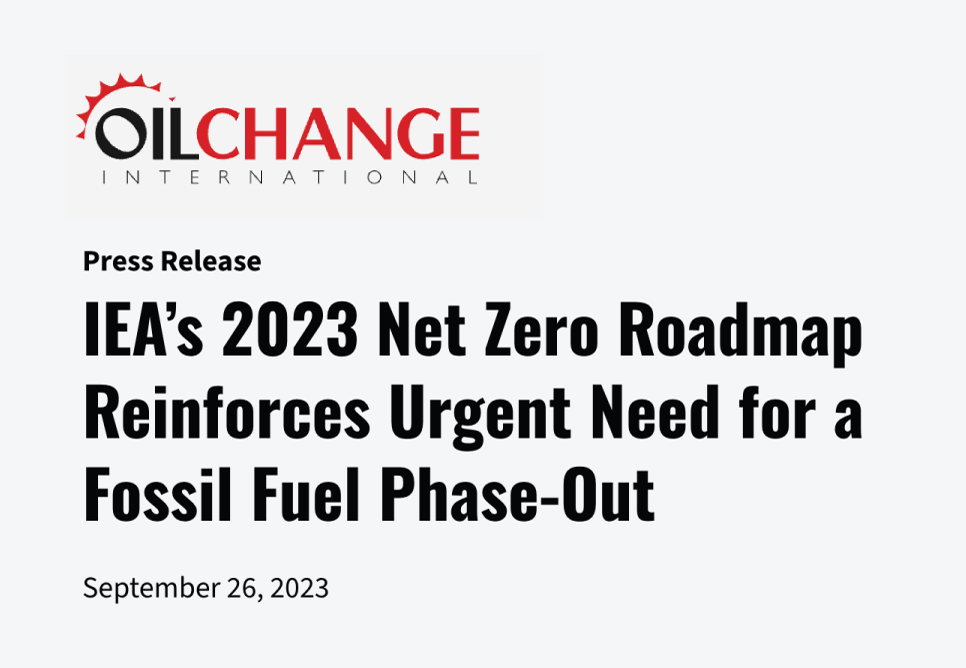
The IEA’s 2023 Net Zero Roadmap report reaffirms no new oil, gas, or coal fields are compatible with the 1.5°C limit. A paper in Nature Communications concludes that coal, oil, and gas supplies must decline on average by 99%, 70%, and 84%, respectively, from 2020 to 2050, in a 1.5ºC pathway. Referencing UNGP human rights guidelines, UN investigators send a letter to companies still facilitating "continued exploration for more oil and gas," indicating they are at risk of generating "significantly worsened climate change-related human rights impacts."

RELX’s purpose remains “to benefit society” and it is “making the world a better place.” In his speech at RELX's SDG Inspiration Day, Ban Ki-moon says "it is vital that businesses firstly identify their full environmental impact, starting with a clear understanding of the organization's impact on the whole of the environment, not exclusively their carbon emissions and pollution." A researcher interrupts her own talk to criticize Elsevier for its ties to fossil fuel expansion. The Lancet Countdown declares "fossil fuel phase out is the most important public health intervention of our time."

A senior Human Resources officer is informed that RELX leaders are "correctly emphasizing that an energy transition is a process, but the science indicates a safe transition—as well as the SDGs and other stated goals—requires that the [fossil fuel] expansion we’re presently informing needs to already have stopped...[it's] unclear why the need to cease expansion is being framed as an unrealistic call to immediately discontinue using fossil fuels, and why our company holds that the expansion we still support is 'in line with the scale of action deemed necessary by science'...it’s unclear why the ethics code allows for our messaging, memberships, and pledges to suggest we don’t support this activity while still engaging in it. The rationale offered for not adequately addressing [word-deed] misalignment was the suggestion that doing so won’t impact climate change." A request to understand "what is and is not permitted under our standards of conduct" goes unfulfilled.

Responding to RELX's petition reply, Union of Concerned Scientists and Scientists for Global Responsibility petition organizers observe that the company is negligent of its UNGP obligations and its own Ethics Code. They conclude RELX's claims "are demonstrably false" and it's "turning a blind eye to its activities that enable other entities to remain high emitters." Petition organizers observe that "it is difficult if not impossible to square the company’s facilitation of new fossil fuel development with its claim that it is scaling 'progress on the SDGs,'" and request that the company pledge to end support for fossil fuel expansion and industry misinformation by the end of 2023.

As a UK Health Alliance on Climate Change member, The Lancet again calls for ending the expansion of any new fossil fuel infrastructure and production: "In the face of increasing harm and suffering, new fossil fuel resources continue to be developed and greenhouse gas emissions continue to rise." (The Guardian)

With no pledge from RELX leaders to stop these activities, the Union of Concerned Scientists and Scientists for Global Responsibility announce the launch a UNGP-based grievance mechanism process to be spearheaded by the Climate Rights Coalition, an organization founded by a former employee.

2023: Elsevier markets a paper that "position[s] 'fossil fuel racism' as a subset of environmental racism" to focus on "the systems and structures which are actively protecting and promoting continued production of fossil fuels." Observing the need for “rapid reductions" in fossil fuel production and the increased emissions from the industry’s CCS schemes, the authors note the need to “disrupt the industry's actions and reduce its influence.”

2023: Despite updated scopes, this journal and many others will continue to publish on topics relevent for "deep hydrocarbon exploration."

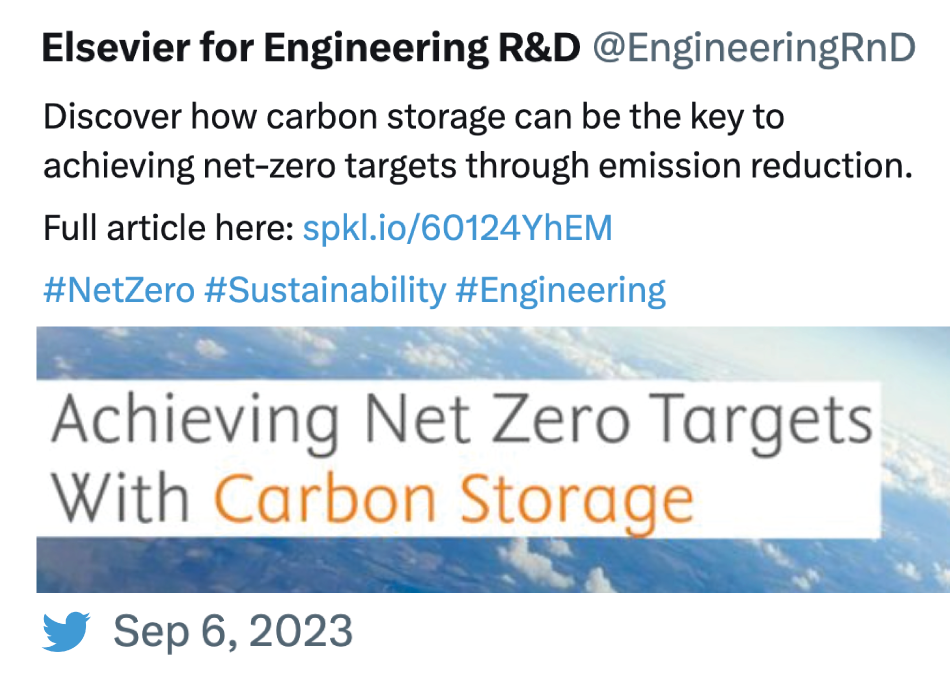
2023: Elsevier promotes Occidental Petroleum’s use of carbon capture to achieve “net-zero targets,” when the reality is Oxy uses it to market bogus “carbon neutral” oil while planning for the “indefinite production of dirty oil.” It's known that no carbon removal approach will solve the climate crisis without “an immediate transition away from fossil fuels,” but Oxy is using captured CO2 for EOR to increase oil supplies. Its "net zero" plans are subsequently labeled a “license to pollute” with "zero credibility."

September 2023: Union of Concerned Scientists report: "In its response to the petition, Elsevier and RELX claimed to be focused on a transition to clean energy. Given the services Elsevier and RELX continue to provide, these claims are demonstrably false."

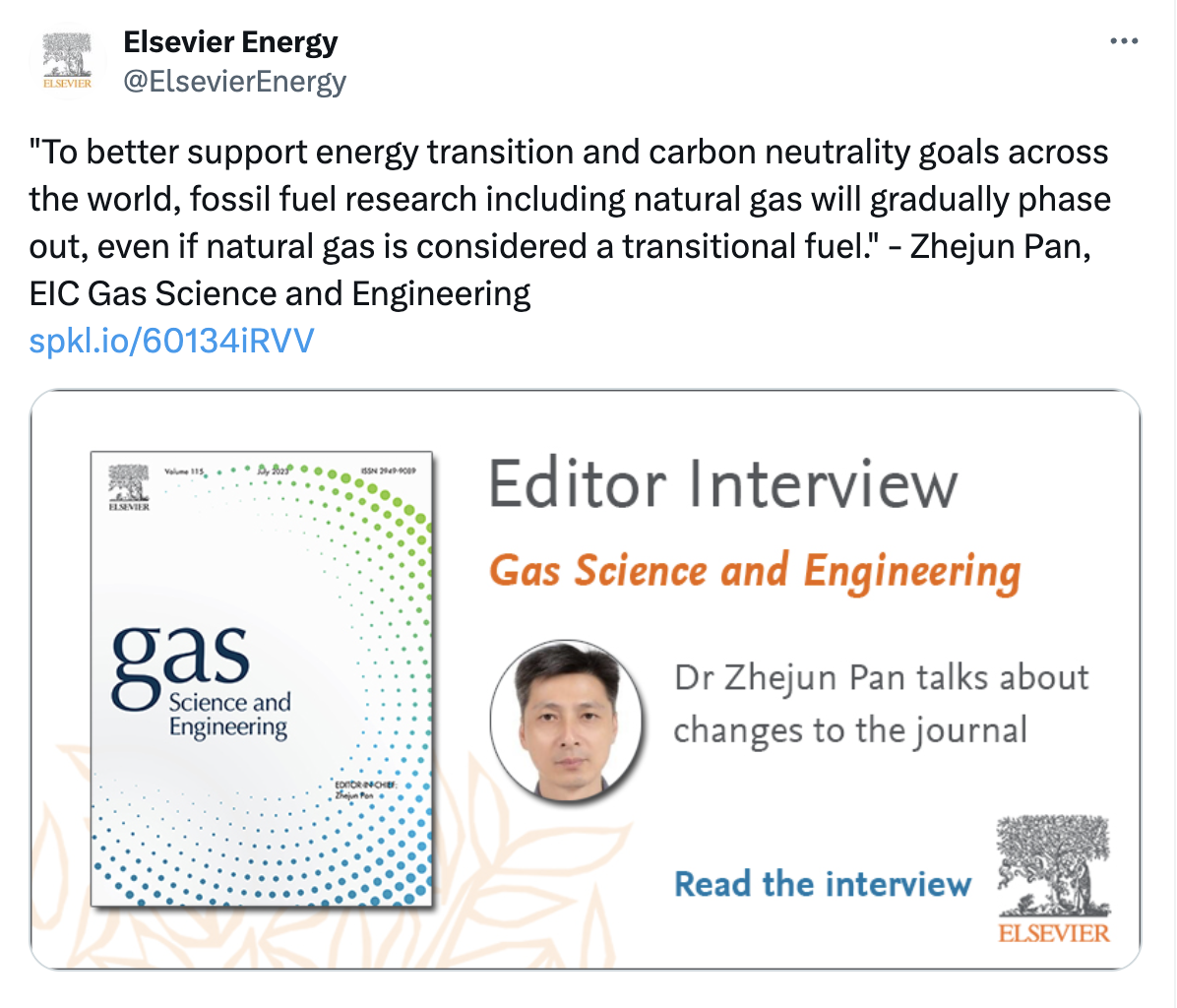
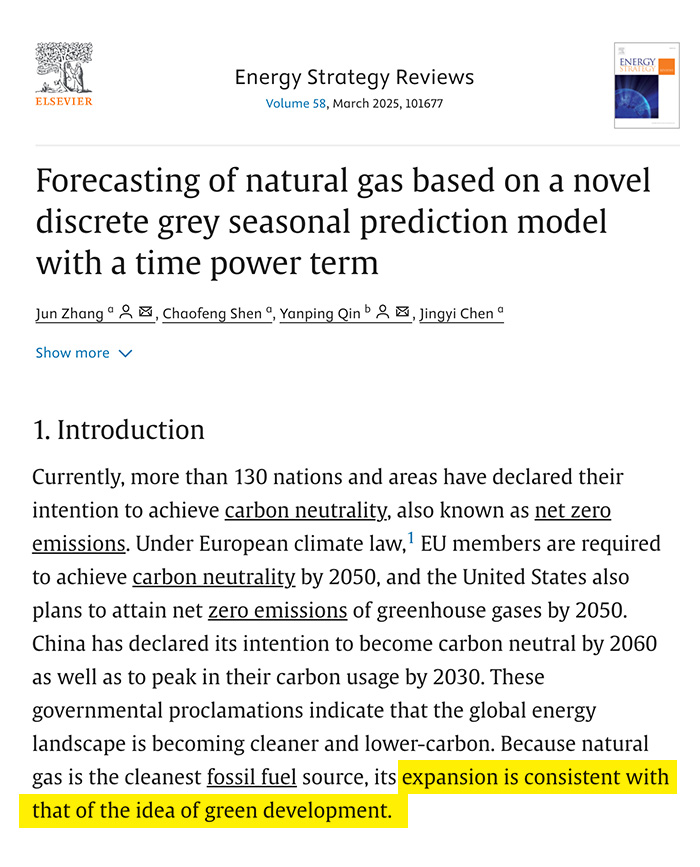
Elsevier's promotion of the industry talking point that gas is a safe "transitional fuel" can mislead policymakers. Experts warn gas development impedes a just energy transition and risks increasing warming far beyond 1.5°C.

October 2023: 'Elsevier Environment' promotes a journal that supports continued fossil fuel expansion.

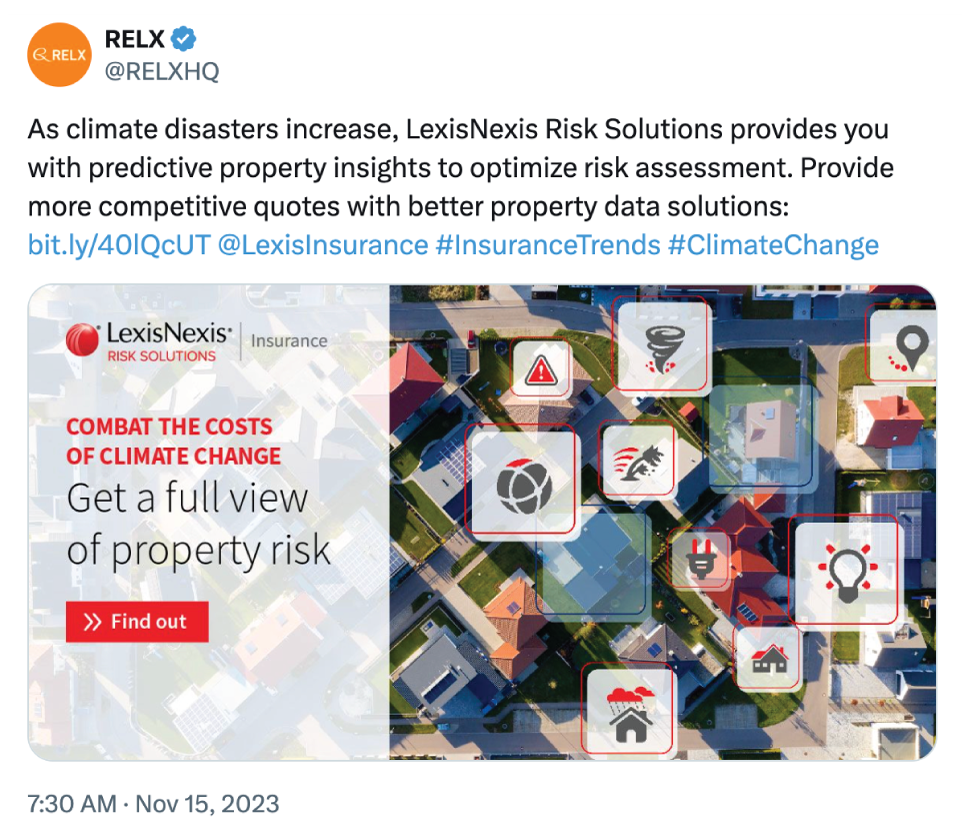
RELX helps insurance companies "combat the costs of climate change" in a world increasingly marked by "climate-driven extreme weather" and "climate disasters" being fueled by the burning of hydrocarbons.

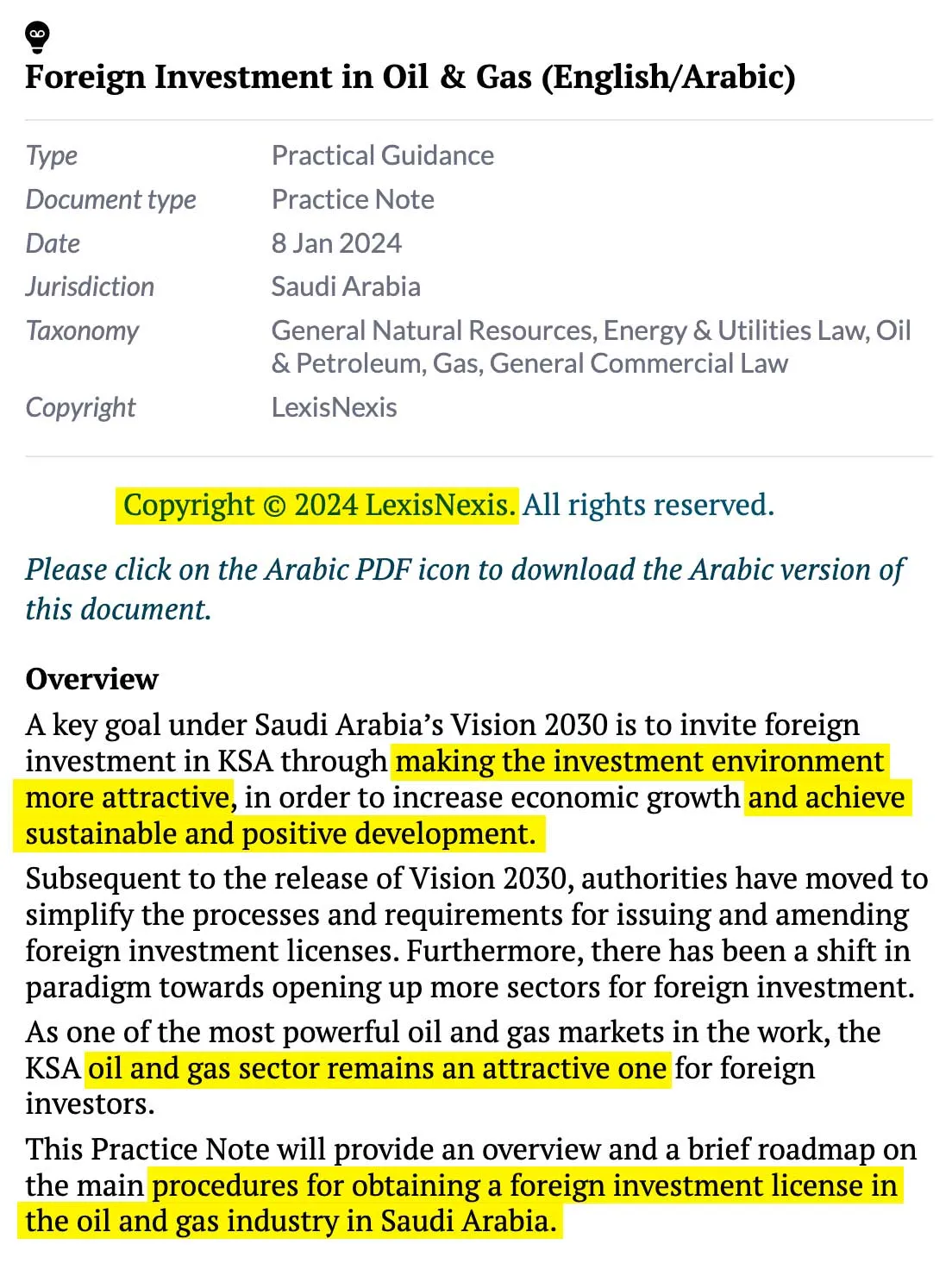
2024 RELX (LexisNexis) provides legal and business information pertaining to O&G exploration and production, including "new pipeline construction," and offers materials that cover procedures for obtaining a foreign investment license in Saudi Arabia for new oil and gas projects. RELX amplifies the Aramco CEO's call for more investment in fossil fuels "amid growing oil demand" in Asia and the Global South, neglecting the fact that renewables are cheaper in Asia and the Global South. Elsevier markets a paper that aims “to promote the commercial exploration of the oil shale” and announces an Outstanding Author award given to the co-author of a paper that identified a “key area for oil and gas exploration.” Amidst rising sea levels, RELX seeks to aid those "drowning in paperwork" by selling resources in service of navigating oil and gas exploration and production operations. Elsevier's new volume of Sustainable Natural Gas Drilling promises insights related to drilling for gas "in a more environmentally sustainable way," while Sustainable Liquefied Natural Gas focuses on LNG operations for "moving towards net-zero." Elsevier "sunsets" Geofacets, but it's still offered by third parties promoting fossil fuel expansion.

RELX markets itself as a member of Amazon's "Climate Pledge," an initiative criticized as enabling greenwashing and that allows members to continue facilitating fossil fuel expansion; the pledge's Lead is asked "how the Pledge considers fossil fuel expansion to still be compatible with net zero and the goals of the Paris Agreement," but no such evidence is provided in response. RELX also markets itself as a UN Race to Zero member, but the Race to Zero Policy & Engagement Leader indicates that RELX is not in Race to Zero and "thus should not be presenting themselves as such." The Race to Zero interpretation guide requires that members restrict facilitating new fossil fuel assets in line with the IEA and IPCC's pathways.

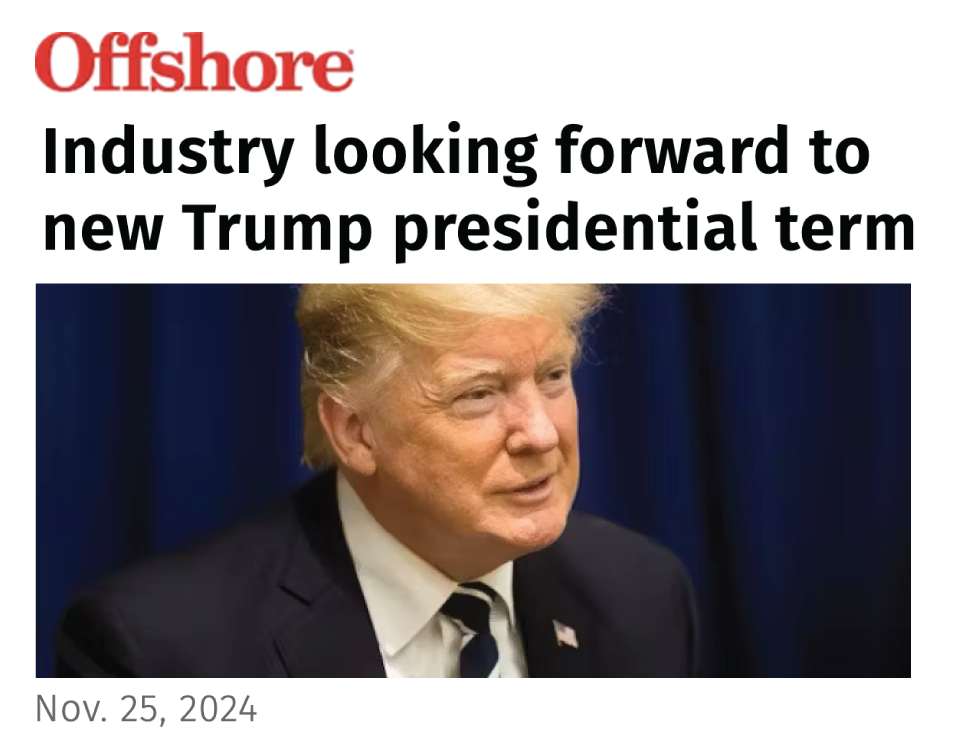
Despite the The Lancet Commission on Public Policy and Health in the Trump Era describing his first term as “singularly damaging," RELX is among other large UK employers that quietly back Donald Trump, who vows to boost fossil fuel production. RELX (ICIS) observes that "oil and gas production, the main source of the feedstock and energy used by the petrochemical industry, should benefit from policies proposed by Trump." Trump's Energy Secretary pick denies the existence of the climate crisis, but correctly refutes the idea of a credible 'energy transition.' REPAC support is also given to Steve Daines, who's condemned CO2 emission reduction rules and the "war on coal," the PAC of Jim Jordan, a deeply anti-climate representative, the PAC of Thom Tillis, a climate change denier who urged Trump to exit the Paris Agreement, and JD Vance, who doesn't think there's a climate crisis.

RELX continues to be accused of ignoring its human rights obligations and "skirting laws for profit" via its ICE contract: "The price paid by society has been steep."

RELX’s Fenasucro & Agrocana fair, focusing on the sugar-energy sector in Latin America, promotes Brazil as “a world reference in bioenergy and sustainability.” With a 2019 decree enabling sugarcane production in the Amazon that's capable of creating "a carbon debt that could take centuries to offset," Brazilian biofuels are considered a threat to the global climate. Neglecting RELX’s focus on "reducing deforestation and protecting rainforests," this fair serves International Paper, one of the largest drivers of deforestation in the world, Bayer, a purveyor of agricultural poisons, Nestlé, part of a coalition that pushes for extractive activity in Indigenous territories—as well as Cargill, BP, Petrobras, and other extractive enterprises permanently harming the Amazon and its people.

RELX (RX) partner Whitehaven Coal continues coal expansion, while another partner, Glencore, generates the “largest coal-mining proposal ever put forward” in New South Wales. With coal use reaching record levels, RELX quietly sells its Australian coal mining exhibitions—to a business that openly celebrates coal expansion and is dedicated to "supporting the growth of the Australian resources sector." RELX acquires the Sustainable Energy Conferences and its array of hydrogen-oriented conferences as part of a “strategy to expand in the growing low carbon sector,” claiming hydrogen is “crucial to ensure a decarbonised energy future” and will “significantly contribute to reaching net-zero goals.” As BP freezes offshore wind projects "to focus on fossil fuels," a RELX hydrogen conference video claims that BP is transforming “from an integrated oil and gas company to an integrated energy company” that aims to get to net zero by 2050 and “keep global warming to no more than 1.5°C.” BP presents its “low carbon hydrogen” as “vital to the energy transition.” In reality hydrogen-based energy is criticized as one of the fossil fuel industry’s “latest deceptive greenwash slogans”—as is “the likewise-deceptive Sustainable Energy Council,” the brand name used by RELX’s SEC events. Desmog reports that RELX’s Hydrogen Americas summit sponsors, which include Chevron, Exxon, and BP, tout “clean” blue hydrogen that's “produced with natural gas and reliant on unproven and unrealistic promises of carbon capture and storage (CCS),” generating "both emissions and leakage of methane, a greenhouse gas some 80 times more potent than carbon dioxide over a 20-year window.” Emissions associated with the gas used to make blue hydrogen may  "increase warming over a couple decades," as the industry's neocolonial push for it threatens "the functioning of the biosphere as we know it." RELX claims its hydrogen efforts “bring together world leaders to build a sustainable energy future,” but Desmog reports that "if the Hydrogen Americas conference is any guide...‘sound policy’ sounds a lot like business as usual.”

RELX (ICIS) sponsors the 2024 ICIS CEO of the Year Award, given to the CEO of Arkema, and claims Arkema's "on the cutting edge of sustainability." Arkema has worked to dilute U.S. climate and plastics regulation and faces a vast array of lawsuits pertaining to its poisoning of humans and the environment with PFAS chemicals ("Forever chemicals"); in April, hundreds of people storm one of its factories in protest of it's toxic impacts. A RELX online publication bemoans that it’s become “‘almost fashionable’ to blame producers for plastics waste," and amplifies the call for an ‘all of the above’ approach to energy sources. RELX elevates an Exxon CEO's criticism of plastics treaty negotiators as having "mistaken plastic itself as the problem," as it promotes the petrochemical industry as "positioned to make a meaningful difference." Despite the human health and climate implications, the partners and customers that RELX champions take aggressive action to prevent a plastics treaty that would curb plastic production.

5 OSDU Forum members are sued for climate harms and discrediting science. After Shell waters down its climate pledges, RELX conferences dedicated to a "#SustainableFuture" welcome it as a returning sponsor. ExxonMobil's CEO—critical of focus being “on the ‘downside’ of CO2 emissions"—blames the public for the crisis. BP freezes offshore wind projects to boost fossil fuel output. Chevron openly promotes it's increasing oil and gas production. A RELX article amplifies the Saudi Aramco CEO's conclusion that "the fantasy of phasing out oil and gas should be abandoned.” All of these oil majors have employees serving as editors on Elsevier journals, as fossil fuel industry misinformation is published in Elsevier journals that claim "it is crucial to find new sources of fossil fuel" and feature content "vital for successful hydrocarbon exploration, development, and production efforts." As its done for decades, the company claims its primary negative impact is "through the use of energy and paper, the use of print and production technologies, and the recycling of waste."

2023 is declared the hottest year on record. In February: Canada's fire season starts, the Atlantic Ocean is 'on fire' with the currents system shows signals of collapse, Antarctica's 'Doomsday Glacier' is rapidly melting, the world has for the first time spent a year over 1.5°C, there's extreme heat across the globe, and the planet is warming at an unprecedented rate. Richard Horton observes in The Lancet that, due to global heating, "every dimension of health tracked by the Lancet Countdown is getting worse, not better," as fossil fuel supply increases are projected to produce the highest-ever level of global oil supply in 2024, fossil fuel firms are spending more money on new oil and gas sites than at any time since the 2015 Paris climate deal, and the industry colludes "to obstruct climate policies” while contesting “efforts to constrain fossil fuel supply.” Despite its own publications indicating climate change threatens "the future of a hospitable planet Earth," the RELX Board again concludes that climate change "will be unlikely to have a significant impact [on RELX] in the medium and longer term."  

Fossil fuel expansion generates emissions inconsistent with a healthy future and promotes new infrastructure that undermines possibilities for a just energy transition.

May 2024: Elsevier promotes a 2023 Outstanding Author award it gives to Zhengjian Xu of the Chongqing Key Laboratory of Complex Oil and Gas Field Exploration and Development, who co-authored a 2023 paper that identifies a “key area for oil and gas exploration.

May 2024: RELX sells its coal exhibitions to Prime Creative Media, a company dedicated to "supporting the growth of the Australian resources sector" that openly celebrates coal expansion.

June 2024: At the same time that BP shifts focus to fossil fuel expansion, a BP rep appears at a RELX event touting BP's wind and solar efforts aimed at meeting the Paris goal. Sponsored in part by BP, the event falsely promotes fossil-based hydrogen as a "clean" energy.

July 2024: After hundreds of activists storm an Arkema 'forever chemicals' plant—and stage a protest depicting an Arkema representative pouring PFAS into the water of a nursing mother—RELX sponsors an award given to Arkema's CEO, praising the company for being "on the cutting edge of sustainability."

November 2024: "Climate change experts have already voiced alarm over Trump's election." (The Lancet)

With climate denial a unifying theme of Trump's cabinet picks, RELX customer TotalEnergies halts a planned New York offshore wind farm—citing Trump's win as the reason.

February 2024: RELX is asked to "provide information on the environmental impact assessments carried out prior to the approval of and/or during the development of products and services facilitating fossil fuel expansion, and whether these studies were prepared with a human rights-based approach, considering the climate change impacts, as well as the social and cultural impacts of this activity."

April 2024

May 2024: Protestors at a RELX energy exposition draw attention to BP's human rights harms. BP reinforces that it's privileging its financial stakeholders.

2024: Elsevier continues to heavily promote its commitment to the SDG's while also serving the expansion of activities that remove all pathways to achieving them.

October 2024: As Africans resist their continent being turned into Europe's gas station, an Elsevier representative tells protestors that fossil fuel development in Africa "does damage" but is "necessary." The next U.S. administration would echo this excuse for continued fossil fuel expansion.

2024 The Climate Rights Coalition's initial human rights grievance mechanism communication is delivered to RELX, including a complaint submitted to The Special Procedures of the United Nations Human Rights Council. An announcement by CRC's Director states "the process is being undertaken by CRC in collaboration with 150+ partner organizations & other stakeholders, while maintaining a 50-person advisory board that acknowledges there are human rights implications to fossil fuel expansion." An associated blog post states that "A primary aim is to give a voice to people being more directly impacted by these business decisions, with the hope to generate more substantive commitments that employees and scientists have been unable to secure." As employees did in 2021, RELX is asked to provide a timeline for when it will stop supporting activities that risk substantial human rights harms.

Elsevier markets its energy journals as advancing "clean energy transitions for all” and a “transition to net zero." An Elsevier climate leader claims the company has "reviewed [its] journals to ensure their missions reflect and advance the UN SDGs and promote a pathway to a net zero future." RELX "reaffirms its support of the Ten Principles of the United Nations Global Compact," which states "decision-makers need to apply precaution" when there is "reasonable suspicion of harm." The UN Global Compact endorses a guidance which includes "no support of new or continued developments of fossil fuels."

RELX claims it has only a "limited impact on climate change" and submits its “science-based” climate targets to SBTi, an organization co-founded by the UNGC, that’s under investigation by the U.S. government and has been criticized in the media, by advocacy organizations, and by one of its original instigators as having clear conflicts of interest; observations include that “comprehensive scientific studies find SBTi’s methods inferior,” SBTi “prioritizes its own and its clients’ confidentiality over and above the public interest,” it's an "SBT standard setter that also serves as a SBT validator with a business model tied to validation growth,” and that SBTi’s targets neglect to include “historic responsibility for emissions — a core tenet of the Paris Agreement” as well as “the only way to enact climate justice.” Uncertain if the organization is “incompetent or insidious,” former SBTi Technical Advisory Group member Bill Baue sees SBTi as having “huge blindspots on the substance side of things” and personally finds that “science-based corporate pledges don’t square with facilitating fossil fuel expansion.” A Senior Project Manager at the UNGC echoes this, sharing that she doesn't believe investments "supporting fossil fuel expansion would be considered in line with the UN Global Compact or its Ten Principles, particularly the principles that sit under ‘Environment’."

RELX’s Chief Sustainability Officer (CSO) promotes RELX’s "responsible lobbying," its commitment to the UNGC's 10 Principles, and its SDG Resource Center. RELX's CSO is a panelist at an event hosted by a marketing agency that, in 2021, stopped working with oil companies because they'd failed to stop generating "new oil and gas fields, which is a central requirement of the IEA's recent Net Zero By 2050 Roadmap"; the event explores "climate action narratives," "effective climate storytelling," and "how to navigate the fine line between sustainability leadership and greenwashing." Sustainability Live London features corporate responsibility speakers from RELX and other companies promoting their sustainability efforts; the event is run by BizClik media group, a "corporate storyteller" that promotes OSDU Forum members as moving "away from Fossil Fuels"—and runs conferences serving oil and gas "Exploration and Production Optimization." Former employees at Microsoft, an OSDU Forum member, reveal they've been gaslit by leaders pledging to reduce the company's own emissions while simultaneously serving fossil fuel expansion; they start an organization calling attention to its business activity that lowers "the economic and technical barriers to increased fossil fuel extraction" and its support for "the expansion of industries that threaten all life." One of RELX’s biggest suppliers and collaborators, Microsoft has climate pledges that are found to be untenable—despite it acknowledging to the UNGC that "human rights are under threat from climate change" and "respect for human rights is embedded in Microsoft’s mission."

The OSDU Forum removes Elsevier from its list of members.

An Amnesty International USA human rights event and petition call on the UN to reform voluntary corporate initiatives like the UNGC that help companies serving fossil fuel expansion to hide their negative impacts. A triple protest disrupts a RELX (RX) renewables and decarbonization conference, which includes participants that are sabotaging climate goals. A protestor notes BP is using the genocide in Gaza as an opportunity for fossil fuel exploration; BP's SVP emphasizes that "projects on the net zero journey have to make returns and be investible for their owners." Researchers interrupt an Elsevier commercial seminar, demanding RELX listen to the science it publishes and stop supporting the business plans of oil majors. A company representative acknowledges "it does damage, it really does, but on the other hand it’s still necessary.” (See: Misinformation) A scientist coalition launches a petition demanding the company stop “spreading fossil fuel company  misinformation that claims fossil fuel expansion is part of the energy transition and in line with the Paris Agreement, and helping Elsevier's oil and gas customers maintain their social license to operate." RELX again asserts it's minimizing its contribution to climate change in a way that's consistent with the science.

16 years after the United Nations Human Rights Council called on companies to practice human rights due diligence and adopt a human rights policy, RELX reveals it's working on drafting a "RELX Human Rights Policy."

In August, a lawsuit is filed in U.S. Federal Court alleging RELX's violations of the Securities Exchange Act and the Fair Employment Practices Act, with the company having made "numerous business decisions that contradict their climate pledges in materials filed to the SEC and disclosed to investors, marketing materials, and commitments to international organizations." The lawsuit observes that RELX's “greenwashing practices are materially misleading to consumers, investors, and impose severe public harm.” The filing includes 3 internal employee reports, as well as a slide deck from a 2022 presentation which observes that "shareholders are uninformed regarding business activities fueling climate change." The lawsuit observes that "While publicly making commitments to key international sustainability codes that allowed them to be listed as one of the leading ESG investment options, they frequently engaged in actions and business practices in private that contradict those commitments and statements...Defendants were repeatedly made aware of their greenwashing practices by their own employees." In addition, it's alleged the company "pressured, harassed, retaliated, and terminated" an employee for "advocating for Defendants to align their actions with their sustainability pledges." In its motion to dismiss, RELX defends its actions by asserting “the ongoing need for energy from the oil and gas industry for many years to come" and the “ongoing need to produce oil and gas for the indefinite future." RELX asserts the plaintiff has “a subjective, philosophical disagreement with RELX about what it means to be sustainable and thinks that RELX should have adopted his views instead...Differing opinions about what constitutes progress towards a generalized, forward-looking goal do not suffice to plead intent to defraud...others at RELX simply held a different view about what actions RELX should take to comply with aspirational statements about sustainability.” RELX asserts that the Company's actions "are not secret, but rather are available to every investor."

A spokesperson for the Lancet Group, publisher of the Lancet, says editors would “strongly scrutinise any fossil fuel industry funded research.” Lancet editor-in-chief Richard Horton promotes the need to "keep fossil fuels in the ground," as The Lancet again urges divestment from fossil fuels to save lives, with a report declaring the "expansion of fossil fuel assets is increasingly jeopardising the economies on which people's livelihoods depend." The World Health Organization endorses this, observing that "the climate crisis is no longer a distant threat – it’s here, and it’s taking a devastating toll on people’s health."

Recent RELX messaging and journal content justifying continued fossil fuel E&P activity as a means to address an "energy crisis" is subsequently reflected in United States federal energy policy.

LexisLexis starts adding legal disclaimers to materials informing fossil fuel expansion.

2025: As global emissions continue to rise, an Elsevier publication with industry-linked funding observes that gas expansion is consistent with green development.

RELX's Sustainable Energy Council convenes a "World Hydrogen Advisory Board" that addresses "industry challenges and opportunities." Members include heads of key industry lobbying groups of "Big Hydrogen," working to ensure fossil fuel lock-in for their oil major members through another false solution.

2025: RELX promotes customers whose "oil and gas activities are substantial and expanding” as "leading the energy transition."

2025: A RELX promotional video employs an AI-generated woman of color who promotes a 4,278-word document that serves "upstream oil and gas projects based on a license to explore, develop and/or produce hydrocarbons," noting that such projects have "long lives." Actual women and people of color continue to disproportionately suffer from the negative impacts being generated by such activity.

2025 As the global heating crisis impacts billions and methane leaks surge amid record fossil fuel production, RELX continues to support the expansion of new fossil fuel assets, selling "content pertaining to upstream oil and gas guidance" to customers involved in "the exploration and production of hydrocarbons." With its own journals noting LNG expansion is "incompatible with climate goal objectives," RELX products include legal practice notes on the financing of new LNG projects and documents on financing oil and gas exploration and production programs. RELX helps customers navigate the construction phase of new LNG projects and petroleum agreements pertaining to exploration and production activities. RELX materials inform on the planning regime for hydraulic fracturing projects, facilitate the exploration and production of conventional oil and gas projects, including ones specific to the UKCS, and generate insights on "upstream oil and gas lease transactions." RELX facilitates agreements for the "critical" exploration phase of new petroleum projects and agreements on "how two or more co-interest holders in an oil and gas project explore for, develop, and produce hydrocarbons." The company offers customers guidance for successful "exploration, appraisal, development and production operations," generated by experts who serve the interests of "international oil companies, independent exploration and production companies and state-owned entities." Such experts contributing to RELX products are promoted by the company as currently active in and/or having expertise in advising oil majors and “major E&P companies,” projects and investments in oil, gas, and petrochemicals, “upstream oil and gas exploration,” including “frontier exploration opportunities,” industry infrastructure and construction, including of oil, gas and LNG production facilities, and pipelines, “disputes related to oil and gas exploration and production [and] the construction and operation of pipelines,” LNG projects and plant construction, “offshore oil and gas projects,” including financing, “oil and gas development projects,” and acquisitions and divestitures related to unconventional resources, pipelines, LNG, and petrochemicals. Another boasts of having been “successful in having the Crown drop a case against a major oil and gas company investigated for health and safety failings” and advised "in relation to an appeal of improvement notices served on an installation operator in relation to hydrocarbon releases offshore.”

RELX appears to start adding legal disclaimers, previously absent, to materials that promote fossil fuel expansion.

RELX's SPE Offshore Europe conference offers an oil and gas session on exploiting the Brazilian Campos Basin presented by an employee of Petrobras, an oil major continuing successful exploration activities in that area; an alternative session is offered by a Saudi Aramco employee on "Gas Well Revival And Production Boosting." RELX’s World Future Energy Summit panel ‘Action to meet a 1.5°C climate threshold’ features a leader from TotalEnergies, a deceptive oil major severely misaligned with climate targets that RELX has described as a “green energy major." Other panels on "a low carbon pathway" and "meeting a 1.5°C climate threshold," feature moderators from EY-Parthenon; EY serves a sustainable future by "boosting production" of oil and gas. Exhibitors include Chiyoda Corporation, which is engaged in  the “exploration of oil, gas and other mineral resources, and investment and financing to such exploration activities.” Another, ADNOC, is “exploring and developing new oil and gas fields” and promoting the expansion of LNG resources by claiming it’s a “lower carbon fuel” serving “the energy transition.” As BP ramps up oil and gas spending to grow fossil fuel production, RELX presents BP as having net zero ambitions and to be “transforming from an international oil company to an integrated energy company…to drive a home-grown energy transition.” Another energy conference sponsor and exhibitor, Drax, is promoted as supplying “renewable power as standard.” In reality Drax sells burning wood as “a green alternative to fossil fuels…because trees grow back,” has “broken environmental regulations over 11,000 times in the US,” is “driving environmental racism,” and is the UK’s “single largest carbon emitter”—pushing  a “false solution” that’s resulted in “sustained opposition from environmental activists.”

Touted by RELX for their efforts pertaining to sustainability and the environment, LyondellBasell, Dow, ExxonMobil, and Arkema pursue a “large-scale coordinated attack” to combat restrictions on the production of "forever chemicals," described as “one of the most pressing environmental and public health concerns of our modern world.” As with hydrocarbons, the PFAS crisis is augmented through 'tobacco playbook' despite the availability of alternatives and their severe impacts on human health. RELX promotes customers such as Shell, Chevron, Unilever, Sadara, and Dow as oil, gas, and petrochemical "decision-makers and influencers" that are "helping to keep us safe and secure," despite their substantial deceptions, contributions to global instability, and their poisoning of humanity and the planet. As it heavily invests in petrochemical expansion projects, SABIC (Saudi Aramco) is promoted by RELX as being a “leader in circularity.” SABIC touts RELX’s recognition of its CEO as underscoring his “commitment to sustainability.” SABIC is in reality helping fuel a global plastics crisis while being sued for its devastatingly toxic impacts, including the dumping of PCB-drenched soil in children’s playgrounds. Despite their "business-as-usual investments that will fail to achieve climate and pollution reduction goals"—and the U.N. explicitly recognizing the link between plastic pollution and human rights—RELX conferences continue to generate "business opportunities" for its chosen petrochemical customers while coating the industry with an unsubstantiated veneer of "sustainability." RELX's plastics industry customers are criticized for their own contributions to this deceptive "information ecosystem."

After RELX's PAC financially supports the re-election of U.S. President Trump, the scientific community uniformly protests the administration's policies. Prominent U.S. scientists sign a letter that observes “the nation’s scientific enterprise is being decimated” and that the Trump administration is “destroying” the ability of scientists to “freely explore new questions and report their findings honestly, independent of special interests.” With researchers sounding the alarm about an executive order that will "destroy American science" and pave the way for "state-controlled science" that favors the fossil fuel energy order, Elsevier leaders are internally petitioned to "stop supporting Members of Congress who are unambiguously hostile to science and the rule of law," and if not, to suspend REPAC organizing activities that "target Elsevier employees." When RELX leadership is asked about any worries they may have regarding Trump defunding scientific research, leadership indicates: "It's very hard for us to have an opinion on it." As he pauses approvals, permits and loans for onshore and offshore wind projects and withdraws support for research that references the climate crisis, Trump declares an energy ‘emergency' to push for more oil and gas drilling. RELX—whose claimed "key environmental impact" is through products and services that "inform debate" and "evidence-based policies"—continues to publish industry-influenced content that can help justify such an energy-needs narrative. An Elsevier paper, partially funded by a key PetroChina research funder, claims that fossil fuel expansion "is consistent with that of the idea of green development" and urges the United States government to "actively participate in international natural gas cooperation projects." Trump makes moves impacting climate, environmental justice, and science, seeks to reverse bans on toxic ‘forever chemicals’, aims to criminalize work on climate science and impacts, and to stop enforcement of "critical policies holding fossil fuel companies accountable." The United States informs the U.N. that it "rejects and denounces the 2030 Agenda for Sustainable Development and the Sustainable Development Goals."

A RELX podcast features Andrei Marcu, Executive Director of the European Roundtable on Climate Change and Sustainable Transition (ERCST). RELX describes ERCST as an “independent think tank” (in the guest’s words, “we’re a simple, honest to God think tank”).  ERCST membership is heavily comprised of oil majors influencing climate change policy to protect industry “from cost arising [from] climate change policy…You have to protect your industry. Whether it's in line with the Paris agreement or not, that's a different story.” The only alternatives, he claims, would be to “commit suicide” or “deindustrialize.” Mr. Marcu has elsewhere been criticized for serving the “interests of big oil companies,” steering climate talks “toward market distractions” and offset schemes, and working to “lock-in the future of fossil fuels.” Despite this, RELX’s podcast host promotes the guest as having the “best approach, from my point of view, in terms of being very rigorously intellectual and critical in terms of the [climate] policy angles.”

With RELX's chosen partners and customers running "perhaps the biggest campaign of disinformation and political interference in American history," an industry group celebrates "a new path where U.S. oil and natural gas are embraced." However, Elsevier presents its oil and gas book portfolio as serving  "oil and gas in transition," with subjects including enhanced oil recovery, CO2 storage, Artificial Intelligence (AI), Machine Learning (ML), and data analytics. In reality, the Company's own products showcase that these tools are being used by its customers to generate exploration successes, fossil fuel lock-in, and increasing emissions. With the industry clear that AI “is being deployed to enhance exploration,” the "merits of using Machine Learning and AI techniques in oil and gas" have elsewhere been touted by Elsevier as tools its customers can use to accelerate reservoir evaluation, optimize production, and "greatly boost the exploration of oil." With the industry rebranding CCS as an oil industry boost, big oil and Trump successfully increase public support for the CCS scam that's more costly and polluting than switching to renewables and, as an Elsevier paper notes, "slow[s] the energy transition and entrench[es] society’s dependence on fossil fuels."

RELX’s "Sustainable Energy Council" promotes the idea that hydrogen is crucial for “achieving our climate goals” and has an essential role in “the transition to a green economy.” SEC claims hydrogen “will significantly contribute to reaching net-zero goals” and the hydrogen industry “will deliver a successful energy transition.” SEC’s World Hydrogen Advisory Board includes stakeholders from Hydrogen Europe (Members include: Equinor, BP, Aramco, Repsol, Shell, TotalEnergies, Eni, and ConocoPhillips) and the Australian Hydrogen Council (Members include: ExxonMobil, BP, and Chevron). These industry groups are heavily involved in lobbying for policies based on their fossil-based “clean” hydrogen scam while openly concerned that “green targets are hindering [the] roll-out of projects based on fossil fuels.” An Elsevier paper notes that "blue hydrogen projects are mainly pushed forward by fossil fuel interests," with the associated reliance on CCS "a solution to climate change for those who are trying to uphold an unsustainable status quo." Labeled another "false solution," blue hydrogen projects entail a notably “carbon-intensive process that perpetuates our reliance on fossil fuels,” break greenwashing laws, and pose “a major threat to the climate and public health.” RELX is striving to “kickstart the next wave of hydrogen project developments into the 2030s.”

RELX claims its events bring "industries together which can advance sustainability…Our [sustainability] approach is guided by the UN Sustainable Development Goals,” goals requiring fossil fuel exploration activities to have ended. While RELX uses “clean, renewable energy sources” to power their events, these events promote and empower businesses generating devastating fossil fuel lock-in: RELX presents Repsol as “leading the energy transition” and “committed to net-zero emissions by 2050,” despite the fact that Repsol has been successfully challenged for deceptive net zero claims "omit[ting] information about Repsol’s overall business activities, including the fact that Repsol’s oil and gas activities are substantial and expanding.” RELX promotes Sonatrach as “reducing the environmental footprint by the use of cleaner energies,” as Sonatrach simultaneously invests $40 billion between 2022 and 2026 in new oil and gas exploration and production activities.

As lawyers of conscience protest "enablers" in the legal profession still facilitating new fossil fuel projects, LexisNexis gives multiple awards to a law firm “at the heart of [the Middle East’s] energy industry” that represents oil, gas, LNG, and petrochemical corporations in “the development of oil, gas, LNG” and other projects. RELX's ICIS CEO is “delighted” to sponsor an award given to ADNOC’s CEO Sultan Al Jaber, citing “the launch of XRG, ADNOC’s international investment arm.” ICIS proclaims that through XRG, ADNOC will “ensure energy remains a catalyst for sustainable growth.” In reality, XRG is in the midst of acquiring Santos, a fossil fuel firm “pursuing massive expansion plans consistent with the failure of the Paris Agreement,” while XRG invests heavily in gas/LNG expansion projects. Echoing messaging found in RELX materials, XRG claims gas is “a lower carbon transition fuel." The award helps fuel propaganda that Dr. Al Jaber is “leading discussions on climate change, sustainability, and responsible growth.” Such assertions are mirrored in a resource shared by LexisNexis, assuring stakeholders that Middle East energy CEOs recognize the changes accompanying the "energy transition," are "adding renewables to their current energy mix," and “taking positive steps to seize the moment.” The truth is CEO's such as Dr. Al Jaber have drawn extensive criticism for greenwashing and helping lead the industry’s sabotaging of global climate goals. In accepting the award, Dr. Al Jaber praises ICIS for enabling his industry “to make informed business decisions.” An analyst on an ICIS podcast emphasizes that Europe “need[s] investments in gas plants...we need those additional [gas] plants.” The host states there’s a need to build more of everything—emphasizing, as RELX leadership told investors in 2023, that “it is effectively an energy transition, right? It doesn’t happen overnight.” New fossil fuel infrastructure is considered incompatible with climate goals.

Noting its ascension to becoming the UK’s fifth most valuable company, RELX promotes a Financial Times article on RELX that suggests data has become the ‘new oil.’ The article finds that RELX is “a business that grows more valuable the less that it is noticed.” Some do notice RELX's facilitation of “large-scale surveillance for civil immigration arrests” with tools that “not only track immigrants, but also ensnare U.S. residents.” The Nation reports that LexisNexis is “selling the software, services, and data that enabled ICE to terrorize our immigrant communities... LexisNexis continues to work with ICE to create national target lists for its raids against immigrants.” A U.S. judge also observes that ICE agents are acting “to terrorize Americans into quiescence.”

RELX promotes its listing with ESG ratings agencies as being reflective of its "corporate responsibility" efforts," but neglects to disclose such agencies are part of an ESG ratings market heavily criticized for “its lack of objectivity,” “methodologies,” and for "not functioning properly." Morningstar gives RELX an ESG Risk Management Rating of Strong; it cites RELX having a "global head of ESG and corporate responsibility who provides updates to the board and engages with senior managers on key ESG issues." However, a Senior Sales officer with Morningstar confirms that, absent other factors, "involvement in facilitating fossil fuel assets is not a downgrade trigger for GSS [Sustainalytics' Global Standards Screening]."

The Company's industry-influenced papers continue to point to extensive new hydrocarbon resources and its engineering service offers new insights on oil field development. With one fossil fuel professional observing that "supply leads demand," RELX serves as a “valuable partner” in the strategic decision making of companies undertaking oil and gas exploration. RELX continues to frame LNG as a "transition fuel" and a "solution" for managing global emissions, as its expansion —incompatible with climate objectives—"sets the world on fire." RELX employs an AI-generated spokesperson to promote a "4,278 word document"—and “thousands of others like it"—that serves the continued generation of new fossil fuel projects with notably "long lives."

With 2024 declared the hottest on record (the first that the average global temperature exceeded 1.5°C above its pre-industrial level), the first catastrophic tipping point is breached, some regions are on track to exceed 3.0°C heating by 2060, and scientists warn that there's only two years left of world’s carbon budget to possibly meet the 1.5°C warming target. RELX takes advantage of growing unprecedented climate impacts by selling resources to insurance companies navigating a world of "climate-driven extreme weather" and "climate disasters" resulting from ever-rising fossil fuel emissions.

The Journal of Political Ecology (2025 paper): "Pressure regarding greenwashing has yet to lead to the elimination of misleading marketing...we ask how Elsevier has evolved its greenwashing practices in the face of criticisms."

2025: Pay-to-play "corporate storyteller" Bizclik, which promotes oil major customers as being climate-conscious, recognizes its client RELX as a top sustainability company. That same month, RELX's Corporate Responsibility Head accepts a lifetime achievement award from Bizclik on behalf of the company's employees; a 2022 employee report cited Bizclik as part of RELX's greenwashing efforts.

2025: The global community observes "implementation of the Paris Agreement is essential for the achievement of the Sustainable Development Goals," yet RELX still serves activities that remove all realistic IPCC pathways to success.

"An effective grievance mechanism is part of the corporate responsibility to respect [human rights]."

Protect, Respect and Remedy: a Framework for Business and Human Rights, U.N. report of the Special Representative of the Secretary-General on the Issue of Human Rights and Transnational Corporations and Other Business Enterprises, John Ruggie (2008)

2025 RELX continues to present itself a member of the UN's Race to Zero initiative, a pledge requiring members to restrict facilitation of new fossil fuel assets in line with IPCC and IEA 1.5°C pathways. As a UNGC member for over 20 years, RELX goes further by maintaining "a precautionary approach to environmental challenges" and avoiding "human rights risks with which the company may be involved through links to its products, operations or services." RELX is ensuring its customers "make better decisions, get better results and be more productive," as it makes "a positive environmental impact through [its] products and services." The company is presented as acting in alignment with the "ambitious 1.5°C goal of the Paris Climate Agreement," it continues to observe that "achieving the SDGs necessitates a transition from fossil fuels," and it continues to claim it prohibits "false representations or statements," "misleading conduct," misleading "reports and written or oral statements," and inaccurate "environmental policies/practices."

Science in Resistance, a book on scientist climate activism, observes that Elsevier "has made numerous statements about its dedication to sustainability. It has an entire website dedicated to advertising its commitment to the Paris Agreement...[yet] Elsevier has been giving the fossil fuel industry all kinds of assistance in order to expand their operations, way beyond what is compatible with the Paris Agreement, their net zero pledges, or any basic notion of sustainability...Most recently, a large coalition of academics and climate NGOs initiated a legal grievance mechanism at the UN Human Rights Council, calling out the company for the risks it poses to human rights as a direct consequence of its support for fossil fuel corporations." The Lancet sounds the alarm regarding the health impacts of companies that are "accelerating growth in plastic production." Health professionals observe that The Lancet, along with its family of over 20 other journals, has updated its advertising policy and will "no longer be accepting advertising content submitted by, or on behalf of, companies that produce, or fund the production of, fossil fuels." They also note that the Company is "causing, and profiting from, major environmental harm by working with the fossil fuel industry, supporting new fossil fuel projects and publishing journals for oil and gas technology and strategies for petroleum exploration. [Márcia Balisciano, RELX Head of Corporate Responsibility has] argued that their fossil fuel activity 'shouldn't negate all of the amazing work' they have done with renewable energy. Scientists point out that continuing support for fossil fuels is exactly what will negate all their work and the work of the scientists they serve."

Pay-to-play "corporate storyteller" BizClik, which promotes oil major clients as serving "environmental objectives" and offering "climate-conscious energy solutions," awards a RELX Corporate Responsibility officer a global sustainability lifetime achievement award. RELX uses BizClik's services to be recognized as one of the world's most sustainable companies and promote itself as having "embedded sustainability within its core business strategy," as well as a contract it was awarded for a customer "seeking certification of alignment with the UN Declaration on Human Rights." Companies such as RELX and Shell promote their actions and policies as being informed by the United Nations’ Universal Declaration of Human Rights, the UN Guiding Principles on Business and Human Rights, the United Nations SDGs, the UN Global Compact, and the OECD Guidelines for Multinational Enterprises.

Pension Bee's Climate Plan, an investment presented as being “in line with the Paris Agreement,” promotes that it “goes further” than simply investing in “companies committed to reducing their carbon emissions” by excluding “companies misaligned with UN Sustainable Development Goals (SDGs).” Investors are informed that “the plan’s objective is to align with the goals of the Paris Agreement to keep the rise in global surface temperature well below 2°C above pre-industrial levels. Any companies who negatively impact or hinder the progress of environmental UN SDGs are excluded from the investment portfolio.” Created in partnership with State Street Global Advisors in response to “desire among savers to evolve how they invest in line with their values,” this fund—labeled "Paris Aligned"—holds over 14,000 shares of RELX stock.

SBTi, the organization to which RELX submits its "science based" climate targets, is again criticized by one of its founding instigators as being "irredeemably corrupt," "flouting the science...and making a mockery of the claim to scientific integrity implied in its name." He rejects the “fundamental systemic flaws of the corporate sustainability field. After more than two decades of engagement in that field, I came to the realization that transformation efforts within the existing economic and cultural systems are doomed, as the self-reinforcing dynamics of these systems are too strong.”

A UN human rights report raises “businesses’ responsibilities to phase out fossil fuels...the main cause of climate change, and the main driver of other planetary crises – biodiversity loss, toxic polution, inequalities and mass human rights violations... International human rights law should be further interpreted in the light of the best available science, which indicates that: Most of the world’s proven fossil fuel reserves must be left unburned…Fossil fuel supply must decline by 55 per cent by 2035 on 2023 levels; Fossil fuel usage must decrease rapidly...No new fossil fuel-burning power plants should be built.” It continues: “The increasing production of plastics and petrochemicals is embedding dependence on fossil fuels in our economies…plastics and petrochemicals cause their own host of severe human rights impacts, worsening climate change, biodiversity loss and toxic pollution, and thereby compounding negative impacts on the rights to life, health, an adequate standard of living and a healthy environment and on cultural rights.” It also highlights the “evolving strategies to keep the public uninformed about the severity of climate change and about the role of fossil fuels in causing it.”

A research paper observes that greenwashing accusations are “increasingly being made from within the scholarly community toward major actors in the academic publishing industry…These initiatives are using strategies that go much further than critiquing and monitoring the industry on its climate mitigation efforts, including by taking legal action, calling out publicly what they see as the rampant greenwashing in the sector, and engaging in acts of civil disobedience, including boycotts. Mostly led by scientists, these initiatives have predominantly focused on Elsevier and its parent company RELX as the target of their campaigns.” Another paper highlights "how corporate publishers attempt to actively conceal their relations with the fossil fuel industry through increasingly dynamic greenwashing strategies in the public sphere and through evolving 'greenwashing rituals' among workers." The paper notes, "Elsevier representatives have detailed this problematic position: '…the IPCC and IEA (International Energy Agency) indicate that fossil fuels will continue to play a role in the energy mix for many years to come' (Martin, 2022). The IPCC and IEA, however, have been clear that fossil fuel exploration must halt." It observes that "as Elsevier tries to push re-branding a step ahead of bad press, its greenwashing practices have become increasingly dynamic, characterized by a mix of discursive posturing and occlusion" and that "despite claims that its corporate responsibility is 'owned by our more than 33,000 people across the business,' none of RELX's divisions have formal, democratic mechanisms for aligning company policy with worker values...Elsevier sponsored spaces and actions for worker participation in climate change mitigation introduce greenwashing strategies into the governance of labor."

An amended class action complaint against Cell Press, Elsevier, and RELX is filed in U.S. court regarding the company's greenwashing and employment practices. The filing includes a Spring 2022 employee report (Jan 6, 2025: Exhibit E) with "a table illustrating the statements and omissions in the 2021 Corporate Responsibility investor presentation...The thoroughly researched RGRC publication points out statements made by Defendants to its shareholders which materially misled investors to believe that RELX has a robust CSR program and implementing ESG goals to its business practice." The complaint observes that "a pension scheme provider included RELX in its Impact Plan and spotlighted it: 'RELX has demonstrated measurable impacts on both society and the environment. But beyond the tools it develops its stated purpose is that these tools are used for the benefit of the world. This is why it was selected for inclusion in the Impact Plan.'" The legal comlaint again alleges that "Defendants knew or deliberately disregarded that [its] statements were misleading," that "the RELX Ethics Department dismissed [psychological safety] concerns on the false grounds that they had already been addressed," and that the company took disciplinary action after the plaintiff was warned  "to think about what's palatable for the company”—that leadership isn’t going to admit “certain things are out of alignment."

The filing observes: "Defendants’ arguments cut against their own defense: they argue that because their most egregious false statements (i.e. UN Net Zero pledge) occurred after Defendants’ contradictory actions were already public (e.g. support for climate-change-denying politicians since 2014), and that Plaintiff should have known better that Defendants were already lying when Plaintiff purchased the stocks in 2021...Defendants take the position that their sustainability-related statements are nothing more than aspirations and forward-looking, thus it would not rise to falsehood. Such an assertion is morally and legally troubling. Defendants made concrete and actionable statements about their sustainability commitments, including their pledge to UN’s Net-Zero campaign goals, UN Race to Zero, and more...

By stating that it is pledging and committing to be aligned with the Net Zero and Sustainability Pledges while continuing to support new fossil fuel explorations, this mismatch of concrete statements versus actions forms the basis for investor fraud...Not only do Defendants’ arguments seek for this Court to make baseless factual inferences about the mind of the reasonable investor, the arguments are not even logically coherent. Indeed, the Net Zero and UNGC principles highlight an urgency in absolutely ending promoting of fossil fuel explorations, and Defendants’ own representations (not the Plaintiffs’ sage opinions) have stated that it is in compliance with the Net Zero and UNGC policies...

The Amended Complaint alleges that RELX knew or intentionally disregarded their own misrepresentation regarding greenwashing. The Complaint highlights that Defendants knowingly and intentionally made commitments and pledges (explained in the previous section). And, between September 2021 and April 2023, the Responsible Growth Report Committee (RGRC), led by the Plaintiff, repeatedly brought RELX’s greenwashing practices to the company’s attention...Among other reasons, the Amended Complaint alleges that Defendants were motivated to greenwash their operations because it would be beneficial to them in terms of marketing to various sectors of investors and consumers. See AC ¶¶ 54-59 (listing all of the ESG highlights the Defendants represented to investors including Net Zero to gain a “green stamp” to attract conscientious investors.)"

The lawsuit is dismissed on procedural grounds, having not been filed in a timely enough manner.